
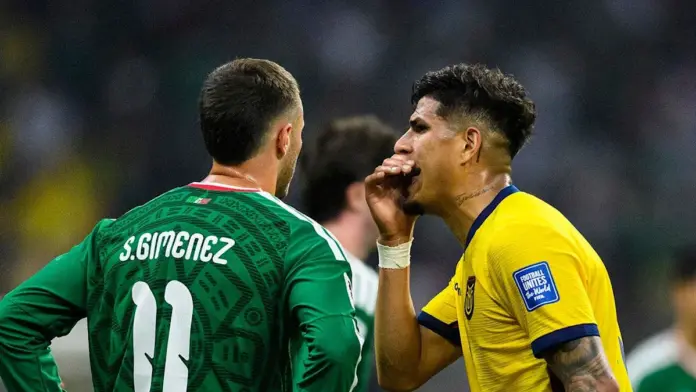
The Union of European Football Associations (UEFA) has decided against enforcing FIFA’s controversial rule which allowed for players to receive red cards for covering their mouths during matches. Instead, starting next season, players in UEFA competitions—Champions League, Europa League, and Conference League—will not face dismissal for this behaviour, although a yellow card may still be issued for unsporting conduct.
This decision comes in light of ongoing discussions surrounding player conduct on the pitch, particularly in the Champions League. FIFA had introduced the rule to combat abusive language, allowing officials to issue red cards for players concealing their mouths while speaking. However, UEFA has opted not to adopt this regulation moving forward, emphasising a different approach to the issue.
UEFA’s Stance on Player Conduct
UEFA confirmed on Thursday that while players will not face red cards for covering their mouths, they could still earn yellow cards if deemed to be attempting to hide communication unsportingly. This statement indicates a nuanced approach to player communication during matches, suggesting that UEFA is focused on maintaining discipline without overly punitive measures.
FIFA’s Original Rule Introduction
The original directive from FIFA was aimed at curbing behaviour that could conceal verbal abuse during match confrontations. This rule was established following an incident involving Gianluca Prestianni, who was accused of using offensive language while obscuring his mouth. FIFA’s stance aimed at promoting a respectful playing environment but faced criticism and logistical concerns from various stakeholders.
The Implications for Players and Teams
By rejecting FIFA’s mouth-covering red card mandate, UEFA has acknowledged potential issues with implementation in fast-paced match scenarios. It suggests a preference for maintaining a level of excitement and spontaneity in games while still holding players accountable for their actions. Teams can now prepare without the fear of disproportionate penalties for behaviour that might not clearly correspond with misconduct.
The SportiveNews view
This decision clarifies UEFA’s commitment to player discretion during matches while retaining the option to discipline unsportsmanlike behaviour. It represents a balanced approach that allows players to express themselves without the exaggerated consequences of FIFA’s approach, potentially paving the way for more lenient, context-sensitive refereeing in high-stakes matches like those in the Champions League.
Frequently asked questions
What led to UEFA’s decision against FIFA’s new rule?
UEFA’s decision emerged from a desire to maintain game flow and avoid disproportionate penalties. They will instead allow yellow cards for unsporting concealment of communication, focusing on discipline rather than outright dismissals.
How does this affect ongoing and future competitions?
The ruling allows for greater freedom and flexibility in player interactions, particularly in prestigious tournaments like the Champions League. It eases concerns over accidentally invoking harsh penalties for otherwise innocuous gestures.
Source: Based on reporting from Fox News. SportiveNews rewrote and analysed the story independently for football readers.
More from SportiveNews: Champions League coverage · Premier League news