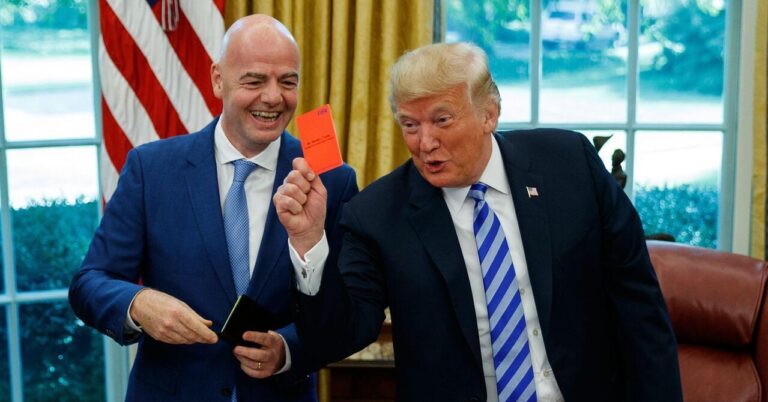
Donald Trump has disclosed that he personally requested FIFA chief Gianni Infantino to reconsider the one-match ban imposed on United States striker Folarin Balogun. The sanction was assigned following Balogun’s red card for a foul during a match against Bosnia and Herzegovina, but FIFA has now opted to suspend the penalty for twelve months, allowing him to participate in the upcoming match against Belgium.
This strange twist comes at a crucial juncture for Balogun, as his availability is essential for the US men’s national team in the ongoing Champions League tournament. Reports indicate that FIFA’s invocation of Article 27 of its disciplinary code raises questions about the integrity of the disciplinary process, particularly given the conflicting reactions from other national football associations.
Belgium’s Appeal Against Suspended Ban
Following FIFA’s decision to revoke Balogun’s automatic suspension, the Royal Belgian Football Association (RBFA) expressed outrage and confirmed plans to appeal the ruling. The RBFA accused FIFA of a lack of transparency, stating they were only informed of the decision through media channels and had not received adequate information regarding the procedural aspects of the ruling.
FIFA Criticised by UEFA for Disciplinary Decision
UEFA also condemned FIFA’s action, labelling it “unprecedented, incomprehensible and unjustifiable.” In a stark rebuke, UEFA maintained that the consistent application of rules is vital for fair competition and without such consistency, the integrity of football is compromised. This marks a real moment in the lead-up to critical matches in the tournament.
The Historical Context of FIFA’s Decisions
This is not the first instance where FIFA has adjusted suspension outcomes during major tournaments. Cristano Ronaldo’s punishment for a red card was revised prior to the World Cup, exemplifying a troubling pattern where influential players benefit from leniency, while others may face harsher penalties. The contrast raises doubts about uniformity in enforcement across similar incidents.
The SportiveNews view
Balogun’s reinstatement underscores the potent influence of international figures in football governance, with Trump’s intervention raising questions about the equitable treatment of players in similar situations. The implications of this decision could reverberate through the tournament, setting a controversial precedent for future disciplinary actions.
Frequently asked questions
What led to the suspension being lifted for Balogun?
The ban was originally enforced following a red card against Bosnia and Herzegovina. However, FIFA has decided to suspend the punishment for twelve months after Trump’s personal request for a review, allowing Balogun to play in the match against Belgium.
What has been the response from Belgium’s football association?
The RBFA has expressed anger over FIFA’s lack of transparency regarding the decision and is appealing the ruling. They claim to have received no explanation of the process followed to lift the ban, raising concerns about fairness and consistency in disciplinary actions.
How has UEFA reacted to the decision?
UEFA issued a statement lambasting FIFA’s decision, emphasising that such a move undermines the integrity of football. They highlighted that fairness depends on consistent application of the rules, which have been disrupted by this unexpected ruling.
Source: Based on reporting from 101 Great Goals. SportiveNews rewrote and analysed the story independently for football readers.
More from SportiveNews: Champions League coverage · Premier League news