
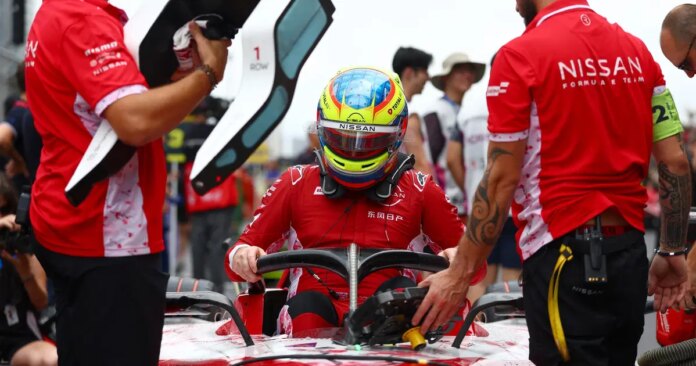
Oliver Rowland’s decision not to follow his instincts regarding a dry set-up during the second race of the Formula E Shanghai double-header proved costly, as he ultimately finished eighth. The reigning champion reflected on a challenging weekend that saw his Nissan team performing inconsistently amid fluctuating weather conditions, showcasing the complexity of race strategy in electric motorsport.
The Shanghai E-Prix concluded with Rowland slipping to third in the standings, now trailing leader Pascal Wehrlein by 27 points. This shift illustrates the ever-evolving dynamics of the Formula E championship, as recounted by GPToday.
Oliver Rowland’s Setup Misjudgment Costs important Points
Rowland faced a critical decision prior to the race, feeling a dry set-up would be advantageous based on weather predictions. However, he opted for a wet configuration that ultimately hindered his performance. This choice came back to haunt him as several drivers, who started further down the grid, prospered by opting for a dry setup when a racing line emerged.
Weather Challenges Complicate Strategy for Nissan
The varied weather conditions throughout the Shanghai event placed immense pressure on teams to adapt their strategies. While Rowland qualified fourth in the wet for the second race, the ultimate switch to a full wet set-up during the race proved detrimental as his competitors capitalised on the drying track, showcasing the unpredictability of the current Formula E environment.
Championship Implications from Rowland’s Performance
Rowland’s eighth-place finish in Shanghai marks a important turning point in his title defence. Having previously been in contention, this result could be important as the championship progresses. His decision-making under pressure reflects the broader challenges drivers face, highlighting the importance of seized opportunities in the competitive landscape of Formula E.
The SportiveNews view
Rowland’s struggles in Shanghai underline the importance of adaptability in Formula E. As the championship intensifies, the contrast between instinct and data-driven decisions will be important for drivers like Rowland. His experience serves as a reminder for the need to balance intuition and strategy in pursuit of the title.
Frequently asked questions
What did Oliver Rowland’s decision on the race setup lead to?
Rowland’s choice to forgo a dry set-up ultimately resulted in an eighth-place finish during the Shanghai race, drastically impacting his championship position. He reflected that had he trusted his gut feeling for a drier configuration, his results could have been greatly improved, potentially leading to victory.
How did the weather influence the Shanghai E-Prix outcomes?
The weather during the Shanghai E-Prix varied greatly, impacting race strategies for all teams. Rowland’s team performed well in certain sessions but struggled with their set-up choices during the race, illustrating how important weather predictions are for race success in such a volatile series.
To stay informed on further developments within the Formula E, visit our comprehensive Formula 1 coverage or explore the latest technical updates impacting the grid.