
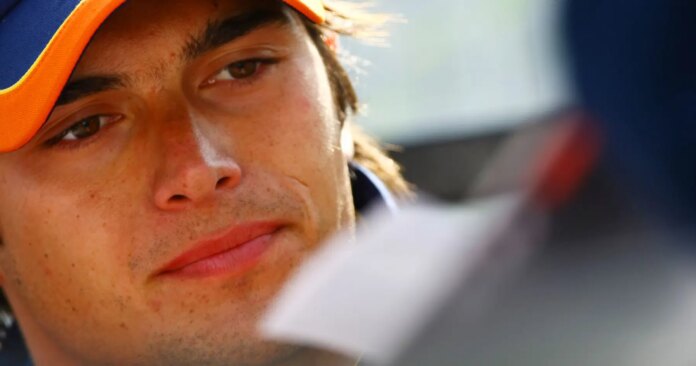
Seventeen years ago, Renault parted ways with Nelson Piquet Jr., an action that set into motion one of the most notorious scandals in Formula 1 history—Crashgate. This decision followed a lacklustre performance from the Brazilian driver, marked by just 19 points and a solitary podium during the 2008 season, ultimately culminating in a disastrous 2009 with zero points over ten races.
In the context of current Formula 1, this turn of events serves as a stark reminder of how quickly fortunes can change in motorsport. As reported by Gptoday.com, the fallout from Piquet Jr.’s departure not only affected him but also reverberated throughout the sport, laying bare the complex interplay of team dynamics and performance pressures.
Piquet Jr.’s exit: A stormy farewell
Piquet Jr.’s public discontent with Renault went beyond simple dissatisfaction. In a vehement statement, he characterised his former team principal, Flavio Briatore, as his “executioner,” accusing him of emotional intimidation. Piquet described how, moments before important qualifiers and races, Briatore would threaten him with replacement if results did not improve.
The shocking allegations that shook the sport
The situation escalated dramatically when Piquet Jr. and his father approached the FIA with shocking claims. They alleged that Briatore and engineering director Pat Symonds orchestrated a plan for him to deliberately crash during the inaugural Singapore Grand Prix in 2008, thereby benefiting teammate Fernando Alonso’s race strategy. Piquet’s intentional crash indeed unfolded as predicted, with Alonso eventually capitalising on the resulting safety car deployment to clinch victory.
Consequences for Renault and its leadership
The aftermath of the investigation spearheaded by the FIA confirmed the existence of this orchestrated plan. Renault received a suspended disqualification, while Briatore faced an indefinite ban from FIA-sanctioned competitions. Symonds was handed a five-year suspension for his involvement. Alonso, however, was absolved of any wrongdoing, and Piquet Jr. was granted immunity in exchange for his testimony.
The SportiveNews view
This event continues to underscore the precarious balance of power within Formula 1 teams. The implications of Piquet Jr.’s allegations served to highlight the lengths to which individuals might go when under intense pressure to perform. It illustrates a broader concern regarding ethical boundaries within the sport, raising questions that still resonate today.
Frequently asked questions
What triggered the Crashgate scandal involving Renault and Nelson Piquet Jr.?
The Crashgate scandal was ignited when Nelson Piquet Jr. was sacked by Renault following a poor performance, prompting him to claim that he had been instructed to intentionally crash during the 2008 Singapore Grand Prix to aid teammate Fernando Alonso’s race strategy.
What penalties did Renault face during the Crashgate investigation?
In the wake of the Crashgate investigation, Renault received a suspended disqualification from the FIA. Team principal Flavio Briatore was banned indefinitely from FIA events, while engineering director Pat Symonds was issued a five-year ban for his role in the scandal.
For more insights on the intricacies of Formula 1, visit our Formula 1 coverage. For the latest on driver market shifts and rumours, check our page on driver market rumours.