
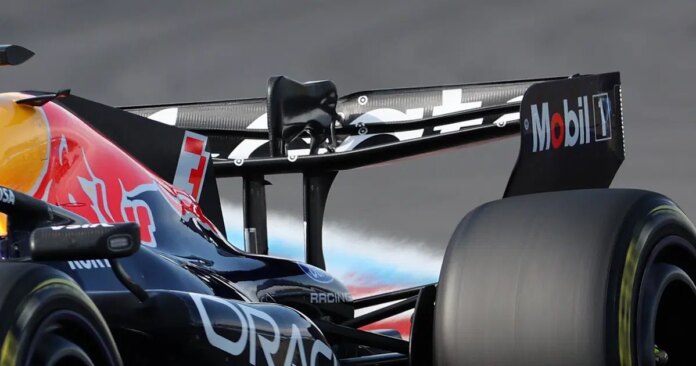
Max Verstappen’s recent retirements in the British Grand Prix and Austrian GP have been attributed to a critical flaw in the design of Red Bull’s RB22 rear wing. This defect in the rear wing’s mechanism raises substantial concerns regarding the team’s reliability standards as they aim for dominance in the FIA World Championship.
This emerging technical issue has real implications for Red Bull as they seek to solidify their position amid fierce competition. Insights from GPToday.com highlight the challenges posed by the design choices made by Red Bull, contrasting these with alternatives adopted by rivals.
Verstappen’s Retirement: A Consequence of Technical Flaws
The RB22’s rear wing mechanism relies on a single central actuator, intended to open and close the DRS flap with simplicity. However, this design’s limitations became glaringly evident, as Verstappen faced difficulties both in Austria and Silverstone. The actuator’s dependency on a pivoting system has proven to compromise reliability when the DRS attempts to close.
Comparative Analysis: Red Bull vs Ferrari in DRS Mechanisms
Contrary to Red Bull’s single-actuator approach, Ferrari has implemented twin actuators within the SF-26’s rear wing endplates. This design enables more reliable operation, particularly during the critical closing phase of the DRS. The stark contrast in design philosophies raises questions about Red Bull’s long-term strategy and adaptability in a rapidly evolving competitive landscape.
Aerodynamic Challenges Faced by Red Bull
The core problem with the RB22 arises during the closing phase, where it experiences an increase in aerodynamic resistance that hampers effective flap closure. When the flap struggles to close completely, it leads to unintended drag and a loss of aerodynamic downforce. This situation greatly affects performance in corners, where Verstappen’s car became unstable, triggering the retirements witnessed in the last two races.
The SportiveNews view
This ongoing issue with the RB22’s rear wing poses serious repercussions for Red Bull as they navigate the championship season. If reliability cannot be ensured, Verstappen’s performance and the team’s competitive edge could both be jeopardised, necessitating immediate corrective actions within their engineering framework.
Frequently asked questions
What specific issue caused Max Verstappen’s retirement in the British Grand Prix?
The retirement was linked directly to a fault in the rear wing mechanism of the RB22. This design flaw resulted in an inability to close the DRS properly, negatively impacting aerodynamic performance.
How does the design of Red Bull’s RB22 differ from Ferrari’s SF-26?
Red Bull’s RB22 employs a single central actuator for its DRS, while Ferrari’s SF-26 features twin actuators located within the rear wing endplates. This fundamental difference contributes to Ferrari’s superior reliability in wing operation.
For comprehensive coverage on Formula 1, be sure to visit Formula 1 coverage. To stay updated on the latest technical developments, check our latest technical updates.