
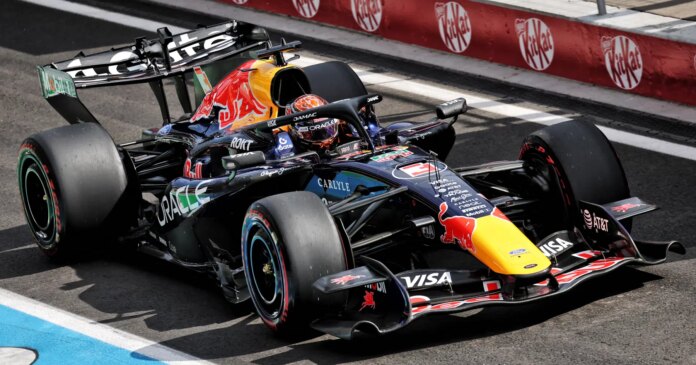
Red Bull Racing faces an uphill battle in their quest for a maiden victory in the 2026 FIA Formula 1 World Championship. Despite a challenging first half of the season, where their car’s performance has been marred by issues with aerodynamic downforce and stability, there are glimmers of hope as the team continues development under the expert guidance of Max Verstappen.
The dynamics of the 2026 championship reveal a pressing reality for Red Bull, as articulated by sources at GPToday. The team remains the only frontrunner yet to claim a race win this season, indicating a need for strategic updates and robust adaptability to regain competitive ground.
RB22’s Ongoing Struggles with Aerodynamics
Throughout the opening races of 2026, the RB22 has been plagued by persistent aerodynamic challenges, particularly regarding rear downforce. Adjustments to the sidepod design aimed to redistribute load alleviate stability issues in cornering, yet the deficits remain clear in aerodynamic mappings.
While modifications have occurred, such as the added profiles on the rear wing actuator, these enhancements have not proven sufficiently effective across all circuits. As the team looks ahead, real overhauls, particularly to the car’s floor, appear important for improved performance in the latter half of the season.
Strength in Power: The Red Bull-Ford Engine Advantage
Interestingly, Red Bull’s engine, a collaboration with Ford, has emerged as a leading force among the newly introduced 2026 power units. This competitive edge allows the team to adopt increased downforce configurations at certain tracks, benefiting from the engine’s capability to compensate for aerodynamic losses.
However, the team’s overall race pace has been a concern, with both qualifying and race day performances falling short of expectations. Although Verstappen has shown flashes of brilliance, like his near-victory in Austria, consistency remains elusive amidst ongoing engine development by rivals Mercedes and Ferrari.
Strategic Updates on the Horizon for Red Bull
As Red Bull approaches the second part of the season, focused updates on the RB22 could herald improvements in speed and handling. The team’s recent performance stabilisation offers a foundation for future enhancements, but this progress may depend heavily on competitors’ choices regarding upgrades at subsequent races.
Also, any successful bid for their first win will likely require exploiting new development synergies while navigating the obstacles posed by the evolving competition landscape, particularly with Mercedes and Ferrari strengthening their power unit developments.
The SportiveNews view
Red Bull’s current position in the 2026 championship encapsulates a critical juncture for the team. While their engine offers substantial competitive advantage, the need for aerodynamic improvements is paramount. The upcoming races will reveal whether they can leverage targeted updates effectively against a backdrop of potentially more advanced rival power units.
Frequently asked questions
What are the main issues currently affecting the RB22?
The RB22’s principal challenges are rooted in its aerodynamic performance, particularly with downforce distribution. Issues have been specifically noted at the rear, necessitating urgent revisions to the car’s floor and overall design for improved stability and cornering performance.
How does the Red Bull-Ford engine compare to its competitors?
The Red Bull-Ford power unit stands out as a frontrunner among the new 2026 engines, allowing the team to experiment with higher downforce settings. This capability provides a strategic advantage, though the team still needs to overcome deficits in race pace and qualifying speed across the season.
For more updates on the latest technical developments in Formula 1, visit our latest technical updates section. To keep up with every aspect of the championship, check out our comprehensive Formula 1 coverage.