
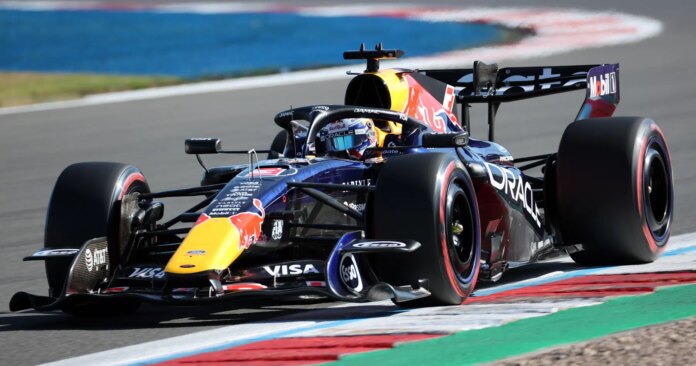
Red Bull Racing’s decision to deny Max Verstappen a pit-lane start for the British Grand Prix has sparked considerable discussion. Despite the Dutch driver’s desire to adjust his car’s setup following a subpar qualifying session at Silverstone, the team opted for a conventional grid position, leaving him seventh, from where he eventually climbed to third before suffering a late race retirement.
This choice comes against the backdrop of a challenging qualifying performance for Verstappen, where he was outpaced by Isack Hadjar, raising concerns about potential engine issues and vehicle balance. In the wake of these performances, Red Bull’s ability to adapt and strategise effectively remains important in the context of the current FIA World Championship.
The rationale behind Red Bull’s decision for Verstappen
Upon reflection, Red Bull’s team principal Laurent Mekies articulated the considerations behind maintaining a traditional grid start for Verstappen. “After qualifying, we recognised the car’s balance was far from ideal, and any setup change would have necessitated a pit-lane start,” he conveyed. The team’s assessment indicated that the risk of an imperfect setup was outweighed by the potential to secure a better finishing position than starting from the pit lane.
Verstappen’s perspective on car balance
Verstappen’s feedback post-qualifying suggested a divergence of opinion regarding the car’s handling. Mekies acknowledged that this resulted in productive discussions with the driver, highlighting that perceptions of car performance can vary greatly between the individual behind the wheel and the engineering team analyzing data. Mekies noted, “There were important learnings to his point,” emphasising the collaborative nature of improving the car’s performance.
Challenges faced during the race
Despite making gains during the race, Verstappen’s competitive surge ended prematurely due to a rear wing issue that caused him to crash out late in the event. Mekies remarked on the difficulties encountered, reflecting that starting from the pit lane might not have guaranteed a better result, questioning whether, “we could have been P3 on the road before the failure happened had we started from the pit lane.”
The impact on Red Bull’s championship aspirations
The outcome of the British Grand Prix may raise concerns about Red Bull’s trajectory in the FIA World Championship. The decision-making surrounding car setup and race strategy underscores the team’s commitment to optimizing performance, even amidst adversity. Going forward, Red Bull must leverage these insights to ensure that they are in prime contention for the remaining races.
The SportiveNews view
Verstappen’s late race departure illustrates the volatile nature of Formula 1, where technical reliability and strategic decision-making are important. Red Bull’s choice not to alter the car setup reflects a broader strategy that prioritises gaining experience and understanding the vehicle’s limitations, key factors as they establish their path in the championship.
Frequently asked questions
Why did Red Bull not allow Verstappen a pit-lane start?
Red Bull determined that altering the car’s setup would mean starting from the pit lane, which they felt would not yield a better outcome than a conventional grid position. Given the difficulties experienced in qualifying, they opted for the latter, believing it offered reduced risks of finishing lower.
What were Verstappen’s main concerns after qualifying?
Post-qualifying, Verstappen indicated he was dissatisfied with the car’s balance and hinted at potential engine problems. These issues contributed to a real performance gap as he struggled against rivals like Isack Hadjar.
For comprehensive coverage on the FIA World Championship, visit Formula 1 coverage. To stay updated on developments, check our section on latest technical updates.