
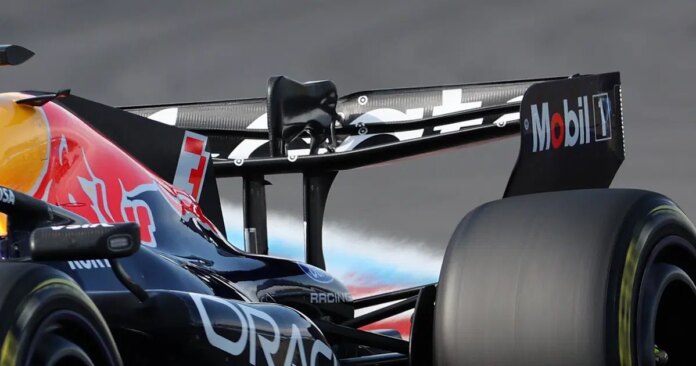
Red Bull team principal Laurent Mekies has announced that the team will not employ the controversial upside-down rear wing at this weekend’s Belgian Grand Prix, with both Max Verstappen and Isack Hadjar reverting to a traditional rear wing design. This decision follows recent safety concerns arising from back-to-back failures of the wing during race events.
This announcement aligns with the critical scrutiny surrounding the RB22’s performance and reliability, particularly after Verstappen’s alarming incidents at the Red Bull Ring and Silverstone. Reports confirm that these developments have been validated by the BBC, ensuring a reliable source for the team’s latest technical evolution.
Max Verstappen’s Rear Wing Challenges
During the recent races, Max Verstappen encountered serious issues with the rear wing that nearly compromised his performance. A malfunction at the Red Bull Ring while vying for pole position forced him to start fifth, and another failure at Silverstone while contending for a podium left him stranded in the gravel. These setbacks have undeniably shaken the Dutch driver’s confidence in the RB22.
Impact of Technical Failures on Team Strategy
The failures of the rear wing showcased a potential flaw in the wing’s design, as a small channel remained open during both incidents, leading to instability and loss of control. After grappling with this “super dangerous” scenario, as Verstappen described it, Red Bull’s decision to revert to a proven rear wing configuration aims to ensure driver safety while maintaining competitiveness.
Red Bull’s Reassessment Post-Silverstone
Since the incidents at Silverstone, Red Bull has undertaken extensive testing, confirming issues with the upside-down wing’s design. The team’s swift shift to a traditional wing reflects a prudent approach to now prioritising safety and driver confidence, key components for success in the highly competitive environment of Formula 1.
The SportiveNews view
Red Bull’s decision to discard the upside-down rear wing highlights an acute focus on both safety and performance reliability. With the championship title at stake, ensuring that their drivers can trust the car is paramount. This tactical shift could play a important role in solidifying Verstappen’s confidence as they navigate upcoming races.
Frequently asked questions
Why has Red Bull discontinued the upside-down rear wing?
Red Bull has opted to remove the controversial upside-down rear wing due to safety concerns following multiple failures during races, particularly affecting Max Verstappen’s performance at the Red Bull Ring and Silverstone.
What does this mean for Max Verstappen’s confidence moving forward?
By reverting to a traditional rear wing design, Red Bull is aiming to rebuild Verstappen’s trust in the RB22. The focus on safety is critical as the team approaches the Belgian Grand Prix, where confidence in the car can greatly impact performance.
For extensive coverage on Formula 1 and the latest technical updates, visit Formula 1 coverage and explore latest technical updates.