
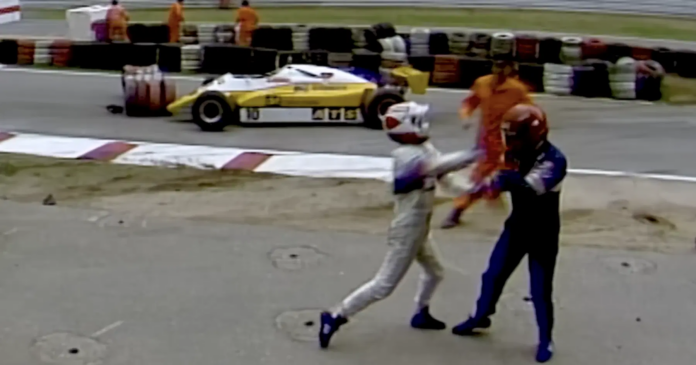
The 1982 German Grand Prix at Hockenheim is infamous not only for Didier Pironi’s catastrophic qualifying crash but also for an extraordinary display of rage between Nelson Piquet and Eliseo Salazar. On that fateful day, Piquet, who had been dominating the race with a substantial 26-second lead, was left reeling after a collision with the Chilean driver when Salazar failed to yield at the Ostkurve chicane, leading to both their retirements.
This incident has lingered in the annals of Formula 1 history, serving as a stark reminder of the high tensions present on the track amidst fierce competition. The implications for the championship were multifaceted, as recounted on gptoday.com, with aspects of driver conduct and on-track etiquette brought to public scrutiny.
How Nelson Piquet’s Fury Marked a Turning Point
During the race, Piquet had been in scintillating form, showcasing an outstanding performance before the Lap 19 incident. His collision with Salazar not only impacted both drivers’ races but ignited a fierce confrontation that would overshadow the day’s results. Piquet, upon exiting his wrecked car, unleashed his frustration through a physical assault on Salazar, caught live on television.
The Immediate Aftermath of the Collision
In the immediate aftermath, Piquet laid into Salazar with punches and kicks as marshals attempted to intervene, capturing the attention of viewers around the globe. Remarkably, despite the very public nature of his actions, Piquet faced no disciplinary measures from the FIA or race stewards, a decision that remains controversial to this day.
Racing Legacy: Patrick Tambay’s Ascendancy
While Piquet and Salazar faced early exits, Patrick Tambay seized the opportunity to claim his maiden victory with Ferrari. With only himself and René Arnoux completing the full race distance, the incident fundamentally altered the race narrative, showcasing both the unpredictability and the dramatic potential of Formula 1.
The SportiveNews view
Piquet’s explosive reaction underscores a important moment in F1 history, highlighting the psychological pressures drivers face. While he later reached out to Salazar with an apology, the incident served as a stark reminder that competitive fervour can sometimes eclipse professionalism. For future races, the ramifications of unsanctioned aggression remain a critical talking point.
Frequently asked questions
What led to the clash between Piquet and Salazar during the race?
Piquet was leading the race by a commanding margin and encountered backmarker Eliseo Salazar at the Ostkurve chicane. Salazar misjudged his braking point, resulting in a collision that ended both their races.
Was Nelson Piquet penalised for his actions after the incident?
No, despite the physical altercation being broadcast live, Piquet did not face any official sanctions from the stewards or the FIA for his aggressive behaviour towards Salazar.
Who benefitted from the crash between Piquet and Salazar in the race?
Patrick Tambay was the beneficiary of the incident, ultimately inheriting the lead and securing his first Formula 1 victory while only he and René Arnoux finished the race distance.
For comprehensive analysis and coverage of the evolving Formula 1 landscape, visit our Formula 1 coverage page, and stay tuned for more stories related to current racing dynamics.