
Niki Lauda’s remarkable return to Formula 1 after his catastrophic crash at the Nürburgring in 1976 is a defining moment in motorsport history. Just 42 days post-accident, Lauda astonished the world by rejoining the competition at the Monza circuit, showcasing an extraordinary resilience that continues to inspire. His comeback underscored not just a personal triumph but also a important point in F1’s evolving narrative on driver safety.
Amid the challenging landscape of the 1976 FIA World Championship, Lauda’s harrowing accident and his subsequent fight for survival dramatically shaped perceptions within the sport. Competitors and fans alike were left in awe as Lauda’s return not only reignited his championship ambitions but also highlighted the ongoing conversations surrounding safety in Formula 1, as outlined by GPToday.com.
Niki Lauda and the Dangers of the Nürburgring
By 1976, the Nürburgring Nordschleife had gained notoriety for its perilous layout, marking it as a high-risk venue for Formula 1 racing. This lengthy track, measuring 22.8 kilometres, featured treacherous corners and minimal safety barriers. Lauda, the then-chairman of the Grand Prix Drivers’ Association, raised concerns about these dangers during his pre-race briefing with fellow drivers, advocating against racing under the precarious weather conditions, yet ultimately acquiescing to the majority decision for the race to proceed.
The Fiery Crash that Changed Everything
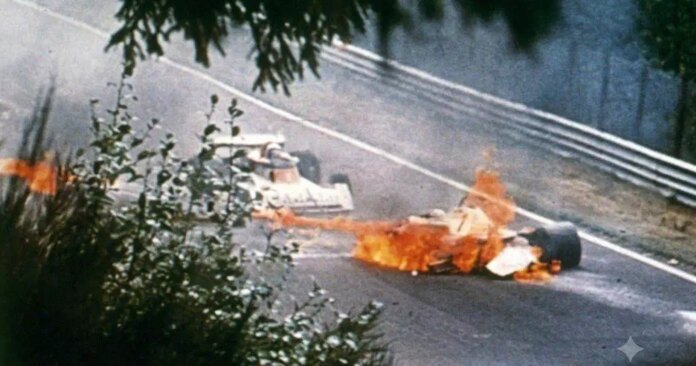
The race on 1 August 1976 commenced under unreliable weather conditions, compelling most drivers to choose wet-weather tyres. However, Lauda soon switched to slicks as the track dried. Tragically, he lost control of his Ferrari 312T2 on the second lap due to a suspected rear suspension issue, leading the car to crash into a rock wall before igniting in flames. Lauda’s perilous situation was exacerbated when other cars collided with the wreck, underscoring the immediate dangers present at the circuit.
Life-Altering Injuries and Immediate Aftermath
Following the collision, Lauda endured severe injuries including extensive burns and critical lung damage from inhaling toxic gases. His situation was dire, prompting medical professionals to express doubts about his survival. As the race resumed, with James Hunt taking victory, Lauda’s horrific ordeal remained starkly vivid in the minds of those within the paddock.
Astonishing Resurgence in Monza
Against all odds, Niki Lauda returned to the grid for the Italian Grand Prix at Monza just 42 days after the crash. Despite suffering visible injuries and battling fear, he finished fourth, signalling not only a remarkable personal comeback but also a important moment in the championship landscape. The fierce rivalry between Lauda and Hunt intensified as the season progressed, culminating in a nail-biting finish to the championship.
The SportiveNews view
Lauda’s comeback at Monza following a life-altering crash represents a monumental chapter in Formula 1, shedding light on the resilience athletes exhibit in the face of adversity. His actions catalysed a deeper dialogue around safety protocols in the sport, ultimately leading to improvements designed to protect drivers from such traumatic incidents. The impact of this narrative continues to resonate with fans and competitors alike.
Frequently asked questions
What were Niki Lauda’s injuries after the Nürburgring crash?
Niki Lauda sustained severe burns on his face and head, lost a real portion of his right ear, and suffered critical lung damage from inhaling toxic gases. His health was so precarious that medical personnel were uncertain about his chances of survival.
How long did it take for Lauda to return to racing after his accident?
Niki Lauda made an extraordinary return to Formula 1 just 42 days after his devastating accident, rejoining the championship grid at Monza on 12 September 1976, where he displayed remarkable determination and resilience despite visible injuries.
For more insights on Formula 1, explore our Formula 1 coverage. If you’re interested in similar remarkable events in motorsport history, check our features on driver market rumours.