
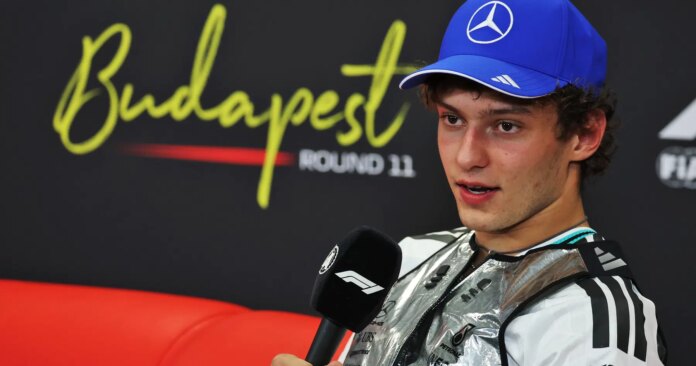
Merecedes’ Kimi Antonelli has highlighted the team’s shift away from an aggressive one-stop strategy at the Hungarian Grand Prix, citing “safety concerns” as the principal factor for their decision during the 70-lap event. Starting from seventh on the grid due to a penalty, the 19-year-old was poised for a bold approach familiar from last year’s race but ultimately modified his strategy to ensure a podium finish.
As the FIA World Championship unfolds, Antonelli’s resilience at the Hungaroring reflects not only personal skill but also Mercedes’ strategic adaptability. His comments, reported by Gptoday.com, offer insight into the pressures teams face in balancing speed with safety, especially in a highly competitive environment.
The one-stop gamble: Kimi Antonelli’s strategy evolution
Initially opting for a one-stop strategy reminiscent of Lando Norris’ victorious tactics from the previous year, Antonelli’s pit strategy was altered after Lap 54 to prioritise safety. The young Italian briefly surged into contention for a podium but was forced to adapt, ultimately leading to a strategy that prioritised tyre longevity over aggressive pace. This decision turned important as the race unfolded, highlighting the complexities involved in race strategy formulation.
Virtual safety car: A double-edged sword for Mercedes
Two laps after his last pit stop, a virtual safety car triggered by Oscar Piastri’s situation reshaped Antonelli’s race. While this deployment provided an unexpected opportunity for fresh tyres, it simultaneously compromised his track position against rivals like Max Verstappen and Lewis Hamilton. In the end, the team managed to secure third place, although the circumstances underscored the unpredictable nature of race day.
Challenges faced by Kimi Antonelli
Despite his competent race execution, Antonelli faced real challenges from oversteer and balance issues that compounded the difficulties of the track. Reflecting on his performance, he acknowledged that conditions were far from easy. This acknowledgment adds depth to the understanding of the driver’s stress under adverse conditions, showcasing both his tactical acumen and the mechanical challenges presented by the Hungaroring.
The SportiveNews view
The shift in strategy observed at Mercedes demonstrates a critical understanding of both driver safety and competitive strategy. As Antonelli continues to build his championship standing, the team’s focus on safety may serve as a benchmark for future races. This incident underlines the need for adaptability, which could be essential for maximising points as the season advances.
Frequently asked questions
Why did Mercedes shift away from the one-stop strategy?
Mercedes’ Kimi Antonelli indicated that the team expressed “concern about safety,” prompting the change in strategy during the race. This decision reflects the delicate balance teams must maintain between pursuing aggressive strategies and ensuring driver safety on track.
How did the virtual safety car affect Antonelli’s race?
The virtual safety car, triggered by Oscar Piastri’s situation, altered track positions and affected Antonelli’s momentum. Although it allowed for fresh tyres, it diminished his track position against rivals like Max Verstappen, influencing the final outcome and ultimately leading him to finish in third place.
For detailed analysis and updates on the evolving Formula 1 landscape, visit our Formula 1 coverage or check out the latest technical updates.