
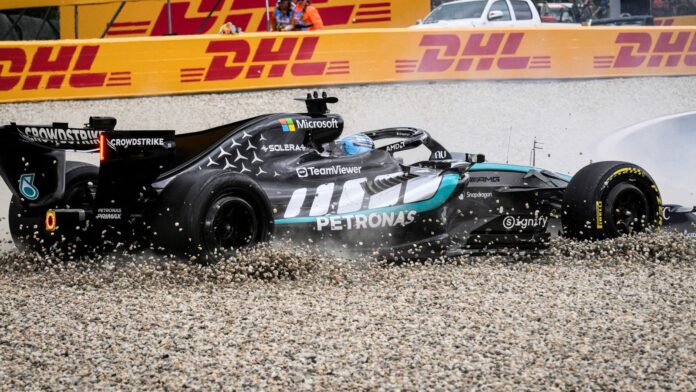
Kimi Antonelli dominated the 2026 Belgian Grand Prix, securing his eighth victory of the season and asserting his position as a strong contender in the championship. Antonelli’s decisive win at Circuit de Spa-Francorchamps showcased his exceptional driving, with Charles Leclerc following closely in second and Max Verstappen taking third place. The grand prix featured a mix of strategic pit stops and critical racing incidents that shaped the outcome greatly.
This race unfolded against the backdrop of a competitive Formula 1 season, where Mercedes continues to assert its strength. The analysis provided by Martin Brundle on gptoday.com emphasised the implications of Antonelli’s performance on the current championship dynamics, illustrating the team’s evolution compared to previous years.
Kimi Antonelli’s Stellar Performance at Spa
Under clear skies, Antonelli’s start was impressive, pulling away smoothly and showcasing unparalleled speed throughout the race. His ability to navigate the challenges of the track effectively highlighted the advantages of Mercedes’ engineering advancements this season. Particularly striking was his dominance over rivals, marking a real contrast to his debut here last year, where he failed to score points.
George Russell’s Early Misfortunes
George Russell encountered difficulties from the outset, suffering from battery deployment issues that hindered his performance. His inability to accelerate properly into important sectors left him vulnerable, leading to a collision with teammate Lewis Hamilton, which resulted in his retirement. The collision was deemed a racing incident, underlining the chaotic nature of the first lap as drivers battled for position amidst close quarters.
The Strategic Pit Stops that Shaped the Race
Pit strategies played a critical role as teams navigated the challenges posed by the circuit. While Antonelli effectively capitalised on the virtual safety car introduced on lap 20, Leclerc’s timing of his pit stop allowed him to leapfrog competitors. This tactical finesse illustrated how critical a well-timed pit stop is in optimising performance on track.
The SportiveNews view
Kimi Antonelli’s victory not only reflects his personal prowess but also signifies Mercedes’ resurgence in the championship after struggling in previous seasons. His commanding lead in the race, coupled with the strategic insights from recent performances, indicates a likely trajectory towards securing both the Drivers’ and Constructors’ Championships, considering the team’s current momentum.
Frequently asked questions
What role did the safety car plays in Antonelli’s victory?
The virtual safety car on lap 20 allowed Kimi Antonelli to execute a strategic pit stop, ultimately enabling him to gain track position. This moment proved important in maintaining his lead over competitors during important laps, highlighting how safety car periods can dramatically influence race outcomes.
How did George Russell’s issues impact Mercedes’ overall strategy?
Russell’s battery deployment problems contributed to a challenging start for Mercedes, affecting team dynamics and strategy. His subsequent collision with Hamilton severely impacted the team’s ability to contend for a podium finish, showcasing the detrimental effects of technical issues in high-stakes racing scenarios.
Antonelli’s performance is emblematic of Mercedes’ reimportantised strength in the 2026 season, signalling a compelling championship battle ahead. With the next challenge awaiting in Budapest, the team will look to build on this momentum. For more in-depth insights, check out our dedicated Formula 1 coverage and stay tuned for the latest technical updates.