
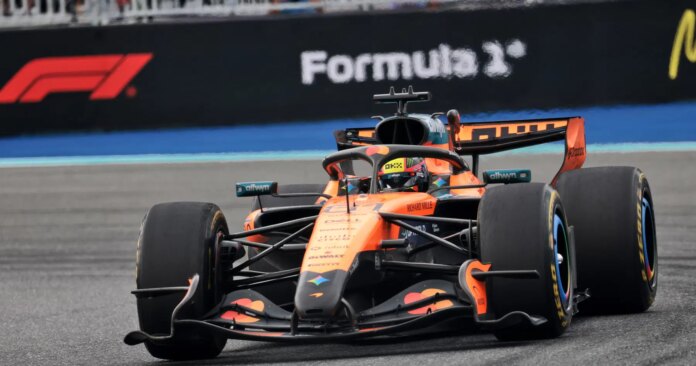
McLaren’s Andrea Stella has highlighted the important role of energy management during the upcoming Belgian Grand Prix weekend, indicating that the “energy starvation” at Spa-Francorchamps will prove to be a real challenge for the teams and drivers alike. The unique characteristics of the 2026-spec engines will heighten the strategic complexity as teams look to navigate the 7.004km layout.
This race comes on the heels of an unpredictable weekend at Silverstone, where teams faced similar energy challenges. According to reports from GPToday, a careful balance between internal combustion engine (ICE) power and battery deployment will be essential as drivers like Fernando Alonso warn that tactical energy use is critical to avoid being “finito” when approaching key sections of the track.
McLaren’s Insights on Energy Management Challenges
Stella elaborated on the specific energy management hurdles that drivers must navigate at Spa, where only three notable heavy braking zones exist: La Source, Les Combes, and the Bus Stop chicane. The middle sector, characterised by demanding corners like Pouhon, lacks energy recovery opportunities, compelling drivers to conserve power greatly during the longer straights.
Strategic Deployment of Straight Mode
As drivers contend with energy deployment, Stella noted that the utilisation of ‘straight mode’ will be restricted to five specific zones, predominantly avoiding corners with considerable lateral loads. This approach will require teams to carefully consider their wing settings — a departure from past Spa strategies that emphasised low drag packages.
Comparisons to Silverstone and Expectations for Spa
Reflecting on the previous race, Stella pointed out the similarities between Silverstone and Spa, describing the latter as “energy-starved.” He indicated that, while Silverstone provided good racing despite the energy constraints, Spa’s longer straights could complicate power unit exploitation and energy deployment further. As such, teams may face unforeseen challenges relating to aerodynamic adjustments in pursuit of optimal performance.
The SportiveNews view
The approach taken by McLaren in terms of energy management could define their performance trajectory this season. With Stella’s insights underscoring the tactical nature of energy deployment, McLaren may be well-positioned to leverage this understanding to enhance their competitiveness on track, especially in a challenging environment like Spa.
Frequently asked questions
How does energy starvation affect race strategy at Spa?
The unique layout of the Spa-Francorchamps circuit introduces substantial energy management tactics due to its limited heavy braking zones and longer straights. Drivers must monitor their power usage closely throughout the lap to ensure optimal performance at critical points, particularly as the 2026-spec engines operate under strict power output constraints.
What can be expected from the deployment of straight mode during the race?
The deployment of straight mode will be restricted in certain areas due to lateral forces present in high-speed corners. Consequently, while five zones allow for power deployment, drivers will need to carefully plan their energy usage to avoid penalties during the race. This strategy will play a important role in determining overtaking opportunities and overall race performance.
For further insights, explore our extensive Formula 1 coverage for the latest technical updates as we approach this exciting Grand Prix.