
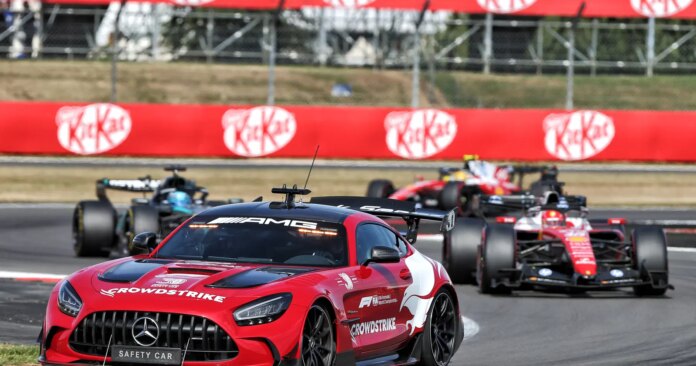
Martin Brundle has proposed a series of potential solutions to prevent Formula 1 races from concluding behind a safety car following recent events at the British Grand Prix. This race, marred by a late safety car incident instigated by Max Verstappen’s spin, showcased the challenges faced in managing race protocols near the closing stages.
The safety car’s deployment disrupted the latter part of the event, with a controversial software error mistakenly signalling the end of the safety car period just after lapped cars were instructed to overtake. The FIA clarified that one lap was properly completed following this announcement, adhering to established regulations. Brundle’s commentary highlighted that the incident was more than a technical misstep, labelling it a “massive tease” for fans hoping for a thrilling conclusion.
Brundle’s Insights on Race Conclusion Protocols
In his column for Sky F1, Brundle outlined several strategies to refine the current regulations during important race moments. One suggestion involved implementing an IndyCar-style approach where, within the final ten laps, lapped drivers would be directed to the pit lane and would rejoin in the order at the back of the pack, effectively removing them from leading positions without altering the race’s flow.
Options Beyond the Current Framework
Another alternative posited by Brundle is allowing lapped runners to simply drop behind the pack rather than rejoining alongside race leaders. Also, he suggested drastic measures like implementing a red flag to allow for a standing restart, although he cautioned that this process is time-consuming and could further complicate race management.
Challenges of Implementation in F1
While Brundle’s recommendations aim to enhance competitive fairness, he acknowledged that these fixes wouldn’t be flawless, noting that certain track layouts, like Silverstone, present unique challenges. The complex regulations governing the definition of a lapped runner complicate matters, as demonstrated by Carlos Sainz’s subsequent penalty, which underlined the intricate nature of safety protocols in Formula 1.
The SportiveNews view
Brundle’s insights reflect a growing concern over race management transparency, particularly as F1 progresses through the current season. These proposed changes could greatly impact the competitive landscape, ensuring that results reflect driver performance rather than procedural anomalies. As the sport evolves, prioritising an exciting and fair viewing experience remains important to maintaining fan engagement and support.
Frequently asked questions
What were Martin Brundle’s proposed solutions for the safety car issue?
Brundle suggested several alternatives, including directing lapped cars to pit lane during the final laps, allowing them to drop behind the main pack, or throwing a red flag for a standing restart. Each option seeks to enhance race competitiveness while managing the issues arising from safety car deployments.
Why was Carlos Sainz penalised after the British GP?
Sainz’s penalty was attributed to the complexities of the lapped runner regulations. His situation was exacerbated by Silverstone’s unique pit lane layout, leading to confusion about when he was considered lapped—a testament to the regulations’ intricate nature during safety car periods.
For comprehensive insights into every facet of the sport, visit our Formula 1 coverage. For developments related to driver contracts and team decisions, explore our latest technical updates.