
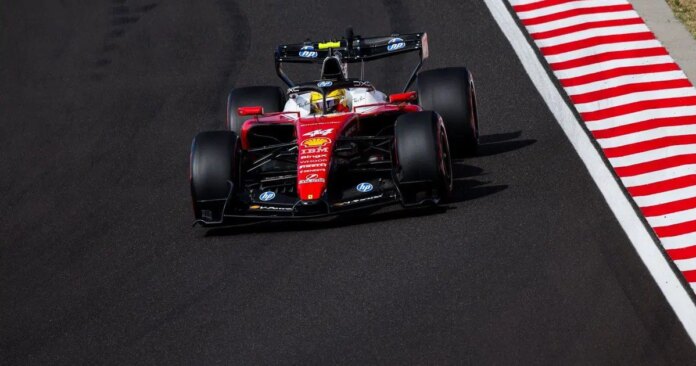
Lewis Hamilton’s return to form in the 2026 FIA Formula 1 season is attributed to his suitability for the new car regulations, according to two-time world champion Emerson Fittipaldi. After moving to Ferrari last year, Hamilton faced challenges adjusting to his new environment, often lagging behind teammate Charles Leclerc. However, under the new regulations, Hamilton has rejuvenated his performance, securing a grand prix victory in Barcelona.
This resurgence reflects a broader context within the current championship standings. Hamilton’s transition to Ferrari has been met with scrutiny, as last season he failed to achieve a podium finish for the first time in his career. The insights from Fittipaldi, shared with F1, provide a pertinent look at Hamilton’s shift in dynamics within the sport, especially as he now sits second in the standings.
How Hamilton’s Adaptation to Ferrari Influenced His Performance
Emerson Fittipaldi highlighted that Hamilton’s improvement is closely linked to his growing comfort with Ferrari’s structure and his enhanced relationship with the team’s engineers. Having experienced a challenging year in 2025, Hamilton’s ability to extract performance from the smaller, lighter cars introduced this season appears to suit his driving style more effectively than the previous ground effect models.
The Impact of New Car Regulations on Driver Performance
Fittipaldi pointed out that the current regulations create a more challenging environment, requiring superior car control. The reduced downforce and overall weight may work in Hamilton’s favour, allowing his innate talent to shine. This shift underscores why many observers are witnessing a reimportantised Hamilton who can once again compete at the highest levels, drawing favourable comparisons to his earlier career.
The Future for Hamilton and Ferrari in the Championship
With Hamilton now having secured a victory and positioned second in the standings, the question remains whether he can sustain this trajectory throughout the season. His previous experiences at Mercedes, particularly the struggles faced in his transition phase, highlight the importance of adaptability in Formula 1. Ferrari’s performance improvements coupled with Hamilton’s resilience suggest a promising outlook for the team moving forward.
The SportiveNews view
Hamilton’s recent success speaks volumes about the effectiveness of Ferrari’s adjustments and his ability to embrace the new regulations. As the season progresses, the synergy between Hamilton’s driving skills and Ferrari’s evolving vehicle may prove important in their championship aspirations. This nuanced partnership could be essential for both his individual ambitions and the team’s overall competitiveness.
Frequently asked questions
What factors contributed to Lewis Hamilton’s improved performance this season?
Emerson Fittipaldi noted that the smaller, lighter cars introduced under the new regulations suit Hamilton’s driving style, enhancing his ability to control the vehicle effectively. His second year with Ferrari has also allowed him to strengthen his rapport with the engineering team, contributing to his performance uplift.
How did Hamilton’s transition to Ferrari impact his performance in 2025?
Hamilton struggled with adaptation at Ferrari during 2025, greatly impacted by consistent defeats to teammate Charles Leclerc. This culminated in Hamilton finishing the season without a podium, which led to growing criticism regarding his capabilities and future in the sport.