
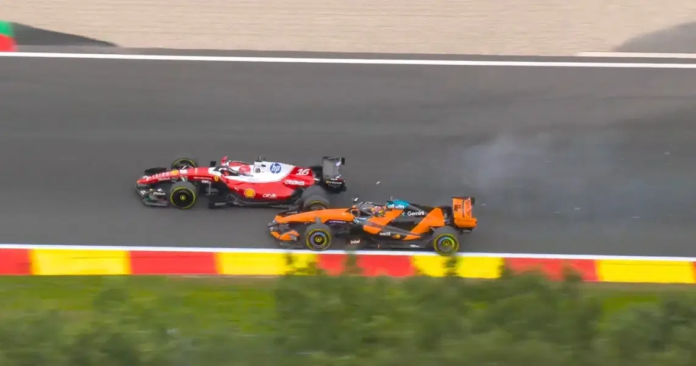
Charles Leclerc remarkably escaped a penalty during the Belgian Grand Prix, a decision that has sparked real debate among motorsport analysts. The Ferrari driver’s incident with McLaren’s Oscar Piastri resulted in a collision, yet the stewards chose not to impose a five-second time penalty, contrasting with the earlier sanction given to Lewis Hamilton for a separate infraction.
The outcome of this decision unfolds against the backdrop of an intensely competitive season, where penalties can have profound implications on championship standings. As reported by SportiveNews.com, the Belgian GP stewards assessed collisions with scrutiny, an element that stood particularly noticeable given the heightened focus on racing standards in 2023.
Leclerc’s Incident with Piastri: A Closer Look
During the race, Oscar Piastri made an attempt to overtake Charles Leclerc at the end of the Kemmel Straight and into the Les Combes chicane. With Piastri almost level with Leclerc, the Ferrari driver moved slightly towards the left, which led to contact between the two cars. The collision damaged Piastri’s car, ripping off part of the floor but fortunately did not lead to major ramifications for Leclerc.
The Reaction from F1 Analysts
Despite the absence of a penalty for Leclerc, reactions were mixed within the F1 community. , Sky Sports F1 co-commentator Martin Brundle expressed his surprise at the decision, indicating he believed the manoeuvre warranted a sanction. This reaction underscores a growing narrative regarding the variability of stewarding decisions, an aspect that races on the edge of consistency within the sport.
Hamilton’s Penalty: Setting the Stage for Fairness
Lewis Hamilton’s earlier penalty for causing a collision on the opening lap raised questions about the consistency of decisions made by the race stewards. The contrasting outcomes for Leclerc and Hamilton highlight an essential discussion point on how track incidents are assessed and the standards drivers are expected to adhere to. This incident may tighten scrutiny on upcoming races as teams and drivers aim to comply with stringent driving standards.
The SportiveNews view
Leclerc’s avoidance of a penalty could greatly influence Ferrari’s strategy moving forward, especially as the team navigates this critical juncture in the championship. The decision sets a precedent that could protect the driver during high-pressure racing scenarios, allowing Ferrari to focus on performance without the spectre of further time penalties looming ahead. As the season progresses, maintaining consistency in stewarding will be important for all teams.
Frequently asked questions
Why did Charles Leclerc not receive a penalty during the Belgian GP?
Stewards assessed the incident between Leclerc and Piastri and concluded that it did not warrant a penalty, despite the collision damaging Piastri’s McLaren. This decision surprised many, including analysts reviewing the event.
What led to Lewis Hamilton’s five-second penalty?
Lewis Hamilton incurred a five-second penalty for causing a collision with his former teammate at the Les Combes chicane on the opening lap of the race. This sanction set a precedent in terms of penalties being handed out during the event.
For ongoing insights into the unfolding storylines in Formula 1, keep an eye on our comprehensive Formula 1 coverage and stay abreast of latest technical updates.