
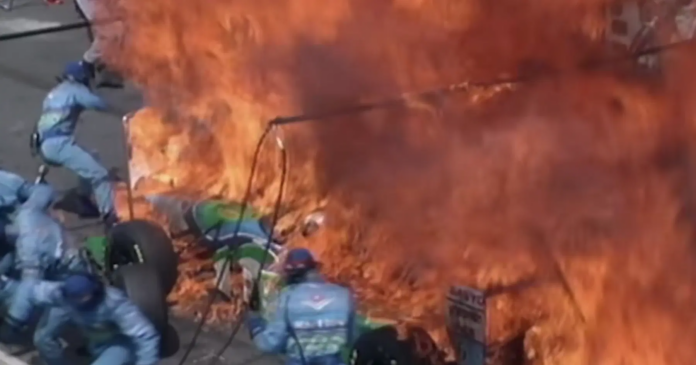
On this day in 1994, Formula 1 witnessed a harrowing incident involving Jos Verstappen’s Benetton B194, which ignited into a fierce fireball during a routine pit stop at the German Grand Prix in Hockenheim. The shocking visuals from that event have left an indelible mark on the sport’s history.
At the time, Verstappen was pitting for fuel when a malfunction occurred. The Intertechnique refuelling nozzle, upon connection, sprayed pressurised fuel onto the car’s heated components, leading to an instant ignition. The fire, although extinguished within seconds by team personnel and marshals, resulted in minor burns for Verstappen, exacerbated by his slightly open visor — a common practice among drivers. Fortunately, while several mechanics sustained burns, none were seriously injured.
The alarming pit stop incident involving Jos Verstappen
During the pit stop, Verstappen recalled the terrifying moment: “You’re in the car, suddenly the whole car goes up in flames and you can’t really do anything. You panic.” He praised the swift actions of the team, which quickly brought the blaze under control, but the underlying issues soon came to light.
Consequences of the Benetton B194 fire
The subsequent FIA investigation revealed a critical oversight: Benetton had removed a important safety filter from the fuel valve, reportedly increasing the flow rate by approximately 12.5%. This adjustment, aimed at reducing pit stop times, allowed fuel to spray uncontrollably after a foreign body jammed the valve, leading to the outbreak of flames. Although Benetton faced a fine, they contended that the filter’s removal was not directly responsible for the incident.
Changes in regulations post-incident
This frightening occurrence spurred real changes in Formula 1 regulations. Pit stop procedures were overhauled, introducing fail-safe mechanisms in fuel delivery hoses to halt flow immediately during malfunctions. Mandatory fire-resistant clothing for all pit personnel and stricter compliance checks for refuelling rigs were enforced, reflecting the FIA’s commitment to safety going forward.
The broader implications against in-race refuelling
The incident also contributed to a growing dialogue within the sport regarding in-race refuelling, which was ultimately banned from 2010 onwards. This decision stemmed not only from safety concerns but also from evolving opinions on racing strategy and efficiency.
The SportiveNews view
The repercussions of Jos Verstappen’s pit stop incident continue to resonate in Formula 1, highlighting the critical balance between speed and safety. The changes implemented post-1994 have fundamentally reshaped operational standards in the pit lane, defining how teams approach refuelling strategy and prioritising personnel safety during high-pressure scenarios. Such lessons remind us of the evolving nature of motorsport regulations influenced by past tragedies.
Frequently asked questions
What caused the fire during Jos Verstappen’s pit stop?
The fire erupted when pressurised fuel sprayed onto the car’s hot bodywork and rear brakes due to a malfunction in the refuelling system. This was exacerbated by the removal of a safety filter from the fuel valve by the team, increasing the flow rate and ultimately allowing fuel to spray uncontrollably.
How did the FIA respond to the incident?
The FIA launched an investigation leading to real changes in regulations. This included the introduction of fail-safe cut-out mechanisms for fuel delivery hoses, mandatory fire-proof clothing for pit personnel, and stricter oversight on refuelling rig configurations to enhance safety standards across the sport.
Formula 1 coverage continues to evolve, highlighting the importance of safety in the sport. Such incidents serve as a stark reminder of the risks involved, influencing how teams manage their pit stops and approach regulatory compliance to ensure the safety of everyone involved.