
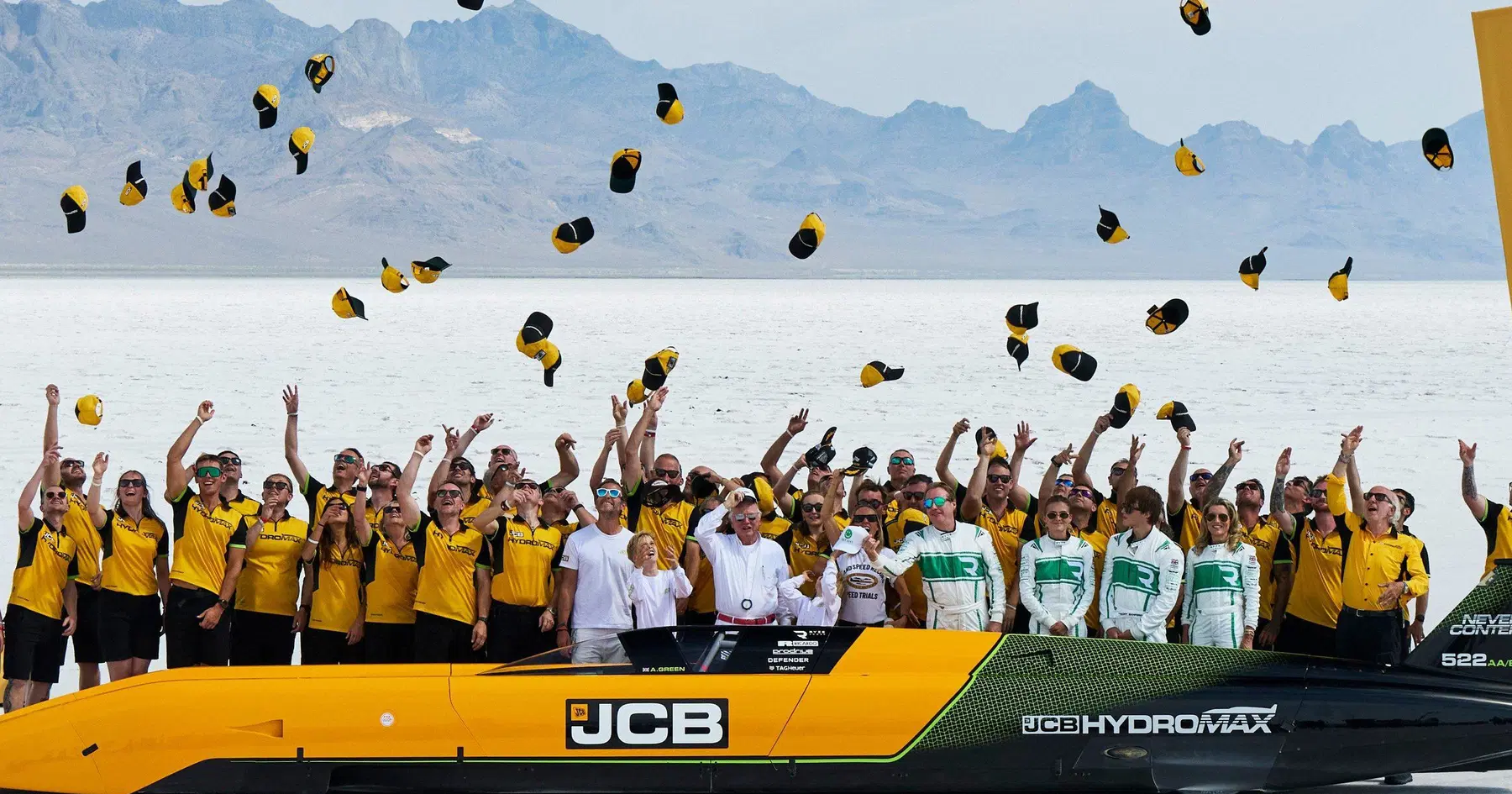
JCB has set a remarkable new world record for hydrogen-powered vehicles, achieving an average speed of 406.320 mph (653 kph) at the Bonneville Salt Flats in Utah. The record was established on 11 August, when Wing Commander Andy Green OBE piloted the innovative Hydromax streamliner through two runs, clocking 400.623 mph in the first run and an astonishing 412.135 mph in the second.
This record marks a real point in the ongoing narrative of sustainable technology in motorsport. The Fédération Internationale de l’Automobile (FIA) has reported that the Hydromax’s achievement far exceeds the previous benchmark of 185.5 mph, set by the BMW H2R in 2004, and Also surpasses the 303 mph record for hydrogen fuel cells. The record now awaits official confirmation from the FIA.
Wing Commander Andy Green’s Historic Achievement with Hydromax
Green’s record-setting runs demonstrated both skill and precision, adhering meticulously to FIA regulations. These stipulate that both runs must occur in opposite directions within one hour, establishing the average speed as the official record. His successful attempts not only showcase his exceptional driving capabilities but also underline the potential of hydrogen-powered engines.
JCB’s Vision for Sustainable Motorsport Technology
The JCB Hydromax is equipped with dual 4.8-litre hydrogen engines, each capable of producing around 800 bhp, culminating in a combined power output of 1,600 bhp. These engines are not just prototypes; they’re production-based units already in use in JCB’s commercial diggers. This establishes a tangible link between cutting-edge motorsport innovation and existing industrial capabilities, reinforcing JCB’s commitment to sustainability.
The Implications of this Record for Hydrogen Technology
The achievement is a critical endorsement of hydrogen as a viable alternative fuel for high-performance applications. As JCB Chairman Lord Bamford stated, this record serves as a testament to the effectiveness of hydrogen technology. By surpassing their own diesel benchmark set in 2006, JCB not only highlights the advancements made over the past two decades but also positions itself as a leader in sustainable engineering practices.
The SportiveNews view
The completion of this record demonstrates a transformative leap in both technological development and environmental responsibility. As Formula 1 considers the future of sustainable fuels, the implications of the Hydromax’s success extend beyond motorsport; they could fundamentally reshape the sector’s approach to energy consumption and emissions standards.
Frequently asked questions
What was the previous world record for hydrogen-powered vehicles?
The previous FIA-recorded benchmark for hydrogen internal combustion vehicles was held by the BMW H2R at 185.5 mph, established in 2004. JCB’s Hydromax has now more than doubled this figure, registering an astonishing average speed of 406.320 mph.
How does the JCB Hydromax achieve its high speeds?
The JCB Hydromax is powered by two 4.8-litre hydrogen engines, providing a total power output of 1,600 bhp. This setup allows the vehicle to not only achieve high speeds but do so with zero CO₂ emissions, marking a real innovation in sustainable motoring.
What is the weight of FIA president Mohammed Ben Sulayem’s recognition?
FIA president Mohammed Ben Sulayem praised JCB’s achievement as a landmark moment in the realm of motorsport, showcasing how innovation, engineering excellence, and sustainability can effectively converge. His comments reflect the broader implications of this record for the future of sustainable mobility solutions.
For more on the latest in Formula 1 coverage and updates on technological advancements, stay tuned to our ongoing insights.