
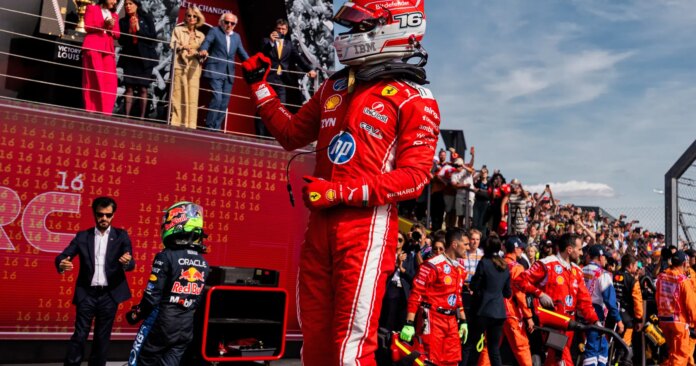
Ferrari’s performance ahead of the Belgian Grand Prix at Spa-Francorchamps appears promising, especially following their robust showing at Silverstone. The SF-26 demonstrated remarkable balance and energy management across qualifications, the Sprint, and the main race, edging closer to the Mercedes W17 than many spectators predicted.
This optimistic outlook unfolds against the backdrop of a closely contested championship, as reported by gptoday.com. , Ferrari’s strategic energy deployment and recovery played a important role in their success at Silverstone, suggesting they might carry this momentum into the upcoming race.
Ferrari’s Strengths from Silverstone to Spa
The transition from a circuit like Silverstone to the sprawling layout of Spa-Francorchamps presents unique challenges. However, Ferrari’s recent strengths might translate advantageously. The demanding sections from Raidillon to Les Combes will greatly test energy management, a domain where Ferrari excelled previously. Also, corners such as Rivage, Pouhon, and Fagnes could put the car’s balance and setup under scrutiny.
High-Speed Demands and Aerodynamic Efficiency
While Spa’s longer straights may expose the Ferrari power unit’s limitations regarding peak performance compared to Mercedes, the circuit’s technical nature may allow the SF-26’s aerodynamic efficiency to shine. At Silverstone, Ferrari’s better energy preservation indicated their ability to adapt to varying circuit layouts while maintaining consistent performance.
Potential Challenges in Tyre Management
Silverstone’s high-speed corners placed substantial stress on tyres, with the SF-26 managing to mitigate graining and degradation effectively. As the team looks ahead to Spa, they will aim for similar outcomes. The intensity of energy recovery in the Belgian circuit’s challenging sectors will be critical in determining tyre wear and overall race pace.
Key Factors for Ferrari at Spa-Francorchamps
Overall, while the top speeds at Silverstone reaffirmed the SF-26’s aerodynamic advantages, the high-speed nature of Spa-Francorchamps poses a real test. Ferrari must mitigate the inherent power deficit in the straights through clever race strategies and effective energy management to secure another strong finish.
The SportiveNews view
Ferrari’s ability to adapt their SF-26’s strengths from Silverstone to Spa-Francorchamps will be important in their championship push. With a focus on energy management and car balance, even against the challenges of a faster circuit, the team could leverage their aerodynamic prowess to remain competitive with Mercedes, potentially reshaping the race’s narrative.
Frequently asked questions
What are the key technical challenges Ferrari will face at Spa-Francorchamps?
Spa-Francorchamps will test Ferrari’s energy management throughout its demanding sections, particularly from Raidillon to Les Combes and through Rivage and Pouhon. These areas will challenge both the car’s setup and the power unit’s efficiency in recovering energy during the race.
How does Ferrari’s performance at Silverstone impact their expectations for Belgium?
The SF-26’s strong showing at Silverstone, marked by excellent balance and energy management, sets a positive precedent. Ferrari will aim to replicate their tyre management success in Belgium, where the extensive energy recovery phases will be critical for maintaining competitiveness against Mercedes.