
Charles Leclerc secured another victory for Ferrari at the British Grand Prix, marking his second win in three races. The dramatic race at Silverstone saw Mercedes’ George Russell finish in second, followed closely by Lewis Hamilton, Leclerc’s teammate, who took third place in front of a home crowd.
With this victory, Leclerc reinforces Ferrari’s position in the current FIA Formula 1 championship narrative. Recent performance trends and competitive dynamics suggest that the Scuderia is regaining momentum, as reported by sources like SportiveNews.com following a tumultuous start to the season.
The safety car’s impact on the race’s conclusion
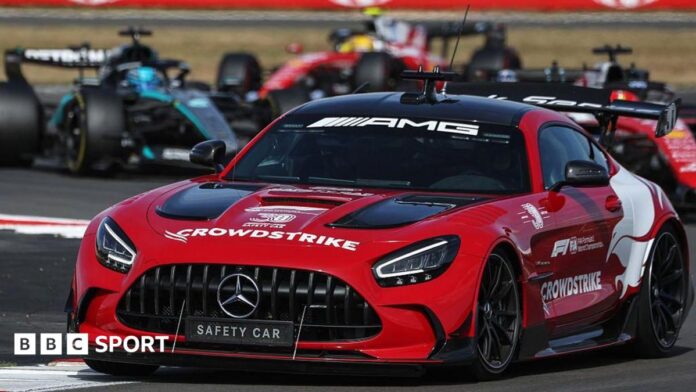
As the British GP concluded with a safety car situation triggered by Max Verstappen’s crash, questions arose regarding the race director’s decisions. Some argue that it would have been preferable to red-flag the race to allow for a sprint to the finish under green flags, akin to the strategies seen in events like this year’s Indy 500. However, the FIA’s established safety protocols dictate that races should, ideally, finish under caution to preserve sporting integrity.
Leclerc’s sentiments post-victory
Leclerc expressed mixed feelings following his win, acknowledging the disappointment for fans hoping for a thrilling finale. Although he appreciated the situation that allowed him to secure first place, he recognised that the absence of a last-lap showdown deterred from the overall excitement.
Drivers’ perspectives on race conclusions
Russell, reflecting on the conclusion of the race, remarked on the standardised nature of how Formula 1 deals with incidents, regardless of timing. He suggested that while finishing under a safety car may not thrill fans, the consistency in applying rules across all circumstances maintains fairness in the sport.
The SportiveNews view
This race outcome underlines an essential debate within Formula 1 regarding spectator engagement versus regulatory adherence. While the safety car neutralises competition, it also safeguards participant safety. Future discussions among teams and governance will likely revolve around enhancing the spectacle without compromising the integrity of the sport.
Frequently asked questions
Did Formula 1 consider red-flagging the race after Verstappen’s incident?
The race director had the option to red-flag the event but opted not to, as similar incidents earlier in the race would typically not warrant a red flag. The decision spotlighted a balance between ensuring safety and adhering to established race protocols.
What do Leclerc and Russell think about finishing under the safety car?
Leclerc confessed that while he was pleased with the win, he acknowledged it wasn’t the ideal conclusion for fans at the track. Conversely, Russell pointed out that the protocols in place ensure that consistency in officiating remains, even if the outcome is deemed less exciting.