
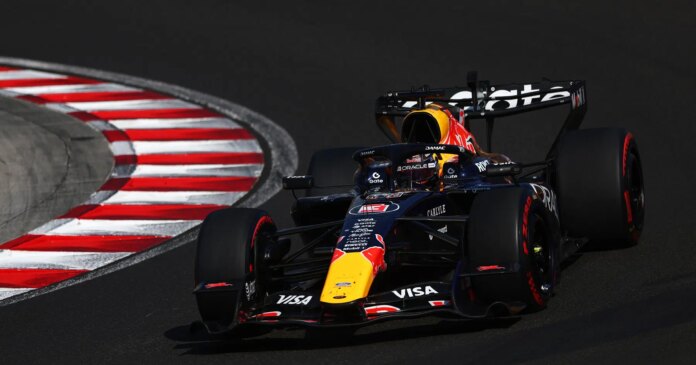
Martin Brundle provided critical analysis regarding Max Verstappen’s comments about experiencing “car degradation” during the recent Hungarian Grand Prix. Despite his complaints over team radio about the handling and performance of his Red Bull, Verstappen secured a commendable second-place finish, aligning with his best result of the season after making an impressive late move past Lewis Hamilton, who had just completed a pit stop under the virtual safety car.
This revelation comes as Verstappen continues to vie for a strong position in the current FIA World Championship. His recent race performance reaffirms his competitiveness, reflecting ongoing tensions and rivalries, particularly with Hamilton. The insights shared by Brundle in his column for Sky F1 highlight key aspects of Verstappen’s driving challenges during the race weekend.
Brundle Analyses Verstappen’s Complaints About Car Performance
Throughout the race, Verstappen expressed concerns about aerodynamic degradation and inconsistent gear shifting. These points, noted by Brundle, indicate a deeper struggle with the car’s handling while competing at the front of the pack. His criticism of Hamilton’s driving during their on-track battle in Turn 1 highlighted the intensity of their rivalry, yet Brundle emphasised that Verstappen’s apprehensions regarding Hamilton’s manoeuvring may have been unfounded.
The Context of ‘Car Degradation’ Explained
Brundle elaborated on Verstappen’s “car degradation” remark, suggesting that any damage to the aerodynamic components, particularly beneath the car, could greatly undermine overall downforce and grip. This is important for performance, as Verstappen faced challenges while navigating aggressive kerbs. Such insights help elucidate the complexities of car dynamics that drivers experience during high-stakes races.
Verstappen’s Driving Strategy and Pit Stop Execution
Despite the handling issues, Verstappen’s strategic driving decisions proved effective. His ability to overtake Hamilton underscores his resilient driving style, reflecting a keen understanding of race dynamics. The timing of his pit with respect to Hamilton’s ultimately benefitted Verstappen, allowing for an advantageous position under virtual safety conditions.
The SportiveNews view
Verstappen’s comments on car performance reveal not only the pressures faced by drivers but also the intricate relationship between car setup and track performance. These insights suggest that while Red Bull remains a strong contender, ongoing evaluations of car dynamics will be important as the season progresses. Maintaining aerodynamic efficiency can greatly influence future race outcomes.
Frequently asked questions
What did Max Verstappen mean by “car degradation”?
Verstappen’s remark about “car degradation” pertains to the impact of potential aerodynamic damage, especially on parts underneath the car. Brundle explained that such damage can disproportionately affect downforce and grip, leading to performance issues during the race.
How did Verstappen manage to secure second place despite his complaints?
Despite his concerns regarding car performance, Verstappen demonstrated skill in overtaking Lewis Hamilton, which allowed him to finish in second place. His strategic driving, along with Hamilton’s late pit stop under the virtual safety car, facilitated this competitive outcome.
The insights provided by Brundle not only clarify Verstappen’s experiences during the race but also highlight the real interplay between driver feedback and technical challenges within Formula 1. For more details on recent developments in motorsport, visit our Formula 1 coverage.