
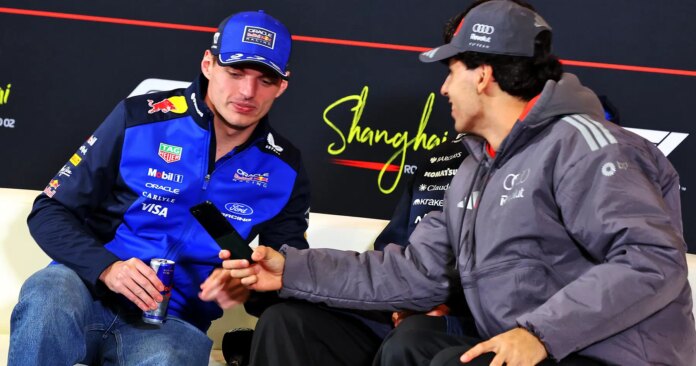
Gabriel Bortoleto has firmly dismissed the notion that the 2026 Formula 1 cars have caused previously fast drivers to lose their edge, asserting that the elite names in the championship remain competitive due to their inherent adaptability. The Audi ace has underscored the essence of driver versatility as essential amidst a landscape of evolving regulations.
This perspective comes as a counterargument to claims suggesting the new regulations mandate a radically different driving style, reshaping the competitive hierarchy. As reported by Formula 1 coverage, the new power units, which feature a near-equal division between internal combustion and electric energy after the MGU-H’s removal, have generated diverse reactions from competitors this season.
Bortoleto Challenges the Narrative on Driver Pace
Bortoleto emphasized that any competent F1 driver should be equipped to adjust their approach, even if that entails overcoming instinctive inclinations. Addressing the query about whether a specific driving style is now essential for success, the 21-year-old stated, “I don’t like the sentence ‘driving style’ because I don’t believe a Formula 1 driver should ever say that. We should be able to adapt to any type of car.” His remarks reflect a mindset resilient to the changing demands introduced with the new regulations.
Evolving Strategies: Insights from Spa-Francorchamps
Bortoleto illustrated the complexity faced by drivers in this new era, particularly at circuits like Spa-Francorchamps, where energy management becomes a focal point of strategy. He explained that while the traditional “slow-in, fast-out” approach remains, it must now be reconsidered for specific corners that demand different tactics. “For example, out of T13 at Spa, we had no deployment from the engine. Thus, pushing harder into the corner allowed for earlier throttle application,” he elaborated, highlighting the intricacies of corner management in the current context.
Maintaining Competitive Standards Amid Changes
The SportiveNews view
Bortoleto’s assertions highlight a critical reality: driver skill remains paramount, even amid substantial regulatory changes. The ability to adapt will be important for all teams as they refine their strategies around energy management and car performance. The ongoing success of established drivers suggests that while new challenges emerge, the foundational elements of racing remain unchanged.
Frequently asked questions
How has the 2026 regulations impacted driver performance?
Drivers like Gabriel Bortoleto assert that the 2026 regulations have not slowed down top performers. Instead, they believe that adaptability is key, with established drivers maintaining their competitiveness despite the introduction of new power units and energy management strategies.
What does Bortoleto say about changes in driving style for 2026?
Bortoleto argues against the notion of a specific driving style being required for speed in Formula 1. He maintains that successful drivers should adapt to varying conditions and that the ability to adjust their driving approach is a hallmark of top-tier talent in the sport.
For ongoing insights and updates on the evolving dynamics of the championship, visit latest technical updates.