
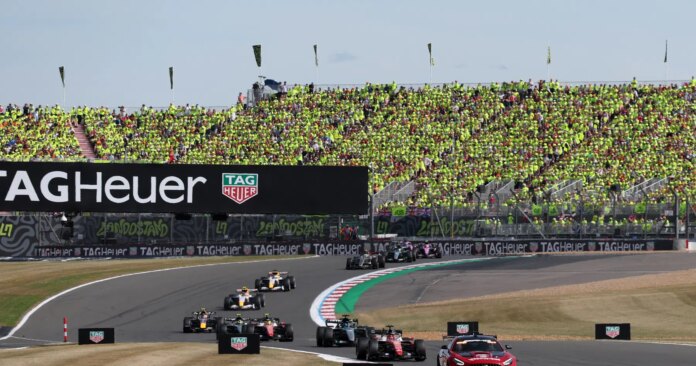
Gabriel Bortoleto has urged the FIA to avoid drastic changes to its safety car regulations following the incident at the British Grand Prix, where the race concluded under safety car conditions. Bortoleto’s remarks come in light of Max Verstappen’s spin at Silverstone, which led to a late race neutralisation with only four laps remaining, igniting debates around the existing safety protocols.
The race concluded after 52 laps with Charles Leclerc taking victory for Ferrari, while Verstappen’s late mishap triggered confusion regarding the unlapping rules. This situation has prompted discussions on revising Article B5.13.5 of the safety car guidelines. Bortoleto, who finished eighth, voiced his concerns during the Belgian Grand Prix media day, cautioning against impulsive regulatory shifts that could exacerbate issues rather than resolve them.
Max Verstappen’s Role in Silverstone’s Safety Car Outcome
The controversial end to the Silverstone GP occurred after Verstappen’s car became stranded at Stowe, requiring the deployment of the safety car. , lapped cars were instructed to overtake the safety car, yet due to timing constraints, the race could not revert to green flag conditions by the end of the race. Bortoleto indicated that the safety procedures were correctly followed, but an electronic glitch that announced the safety car’s premature departure contributed to the misunderstanding.
Driver Reactions and the FIA’s Responsibility
In the aftermath, responses from various drivers have surfaced regarding the appropriateness of current regulations. Bortoleto expressed a tempered view on the need for change, noting that the existing safety car rules had functioned adequately in prior races. He mentioned, “If there is no safety concern, there is no reason to keep the safety car out,” highlighting that alterations to established protocols should be approached with caution to avoid unnecessary complications.
The Debate Around Lapped Cars and Safety Protocols
The insistence on lapped cars passing the safety car has emerged as a contentious issue. Bortoleto acknowledged that while it can be beneficial during earlier race stages to level the playing field, such decisions late in the race could be detrimental. He stated, “If this is one of the reasons why the race finished under a safety car, then it could have been avoided,” signalling his recognition of the intricate balance between fairness and competition.
Red Flags vs. Safety Car — Perspectives from the Grid
As drivers convene to discuss potential amendments during their briefing in Spa-Francorchamps, various perspectives have emerged. Bortoleto firmly believes that red flags should only be reserved for real incidents, advocating for the integrity of racing over entertainment value. He asserted, “We don’t need to focus only on the entertainment to finish the race,” stressing the importance of maintaining clear guidelines to mitigate confusion and preserve safety standards.
The SportiveNews view
Bortoleto’s concerns reflect a broader sentiment in the paddock about the implications of regulatory changes. As discussions regarding the safety car rules and unlapping procedures evolve, the FIA has the opportunity to refine its strategies while preserving the spirit of competition. Adopting a measured approach will be essential in ensuring the championship maintains its integrity and adheres to the core principle of driver safety.
Frequently asked questions
What incident triggered the safety car deployment during the British Grand Prix?
The safety car was deployed after Max Verstappen spun at Stowe on lap 48, losing control of his Red Bull and becoming stranded in the gravel. This incident led to a late race neutralisation with only four laps remaining.
Why does Gabriel Bortoleto warn against changing the safety car regulations?
Bortoleto cautioned that impulsive rule modifications could lead to “creating another 10 problems.” He believes that the safety car and virtual safety car rules have worked effectively in prior seasons and that any changes should not be enacted lightly.
Formula 1 coverage will continue to analyse these developments as they unfold, alongside latest technical updates from the pits.