
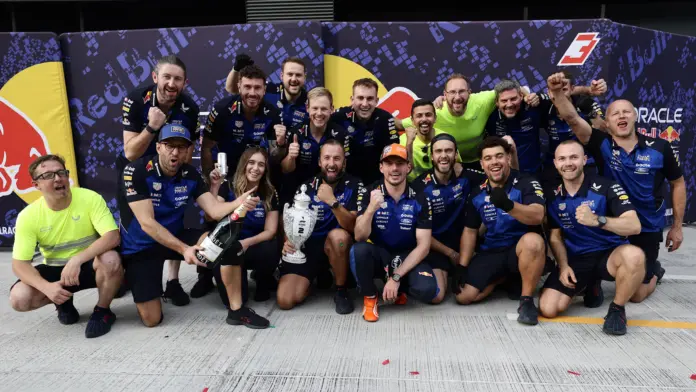
Max Verstappen secured a commendable second-place finish at the Hungarian Grand Prix, marking his fourth podium this season. His impressive maneuver on Lewis Hamilton was a notable highlight, but it was Red Bull’s tactical decisions that greatly influenced the outcome, as team principal Laurent Mekies highlighted after the race.
This result fits into a broader strategic narrative for Red Bull as they navigate through the FIA World Championship. As reported by Formula 1, the team is currently stabilising its performance amidst a competitive field, especially with the upcoming summer break and Verstappen’s home race on the horizon.
The bold strategy that led Verstappen to P2
Mekies acknowledged the team’s rapid strategic decisions during the race, especially considering the fluctuating dynamics. Initially following McLaren’s one-stop strategy, Red Bull decided to take a risk by fitting soft tyres for Verstappen’s final stint. This decision, made amidst the chaos of a late Virtual Safety Car (VSC), greatly impacted their track position and ultimately secured a important podium finish.
Red Bull’s tactical execution draws praise
Mekies praised the pit wall’s performance, noting that their decisions consistently aligned with the team’s objectives. “A number of quite spicy strategy calls,” he remarked, particularly highlighting their choice not to cover Hamilton’s early pit stop. This strategic foresight contributed greatly to the race execution that has characterised their recent performances.
The challenge of car performance for Red Bull
Despite the positive race outcome, Red Bull faced challenges throughout the weekend in Budapest. Both Verstappen and his teammate Isack Hadjar reported issues regarding vehicle balance and performance. Mekies acknowledged that the team has struggled to provide the drivers with a car that operates within the ideal performance window. “We never managed to give Max and Isack a car they could push with,” he stated, noting this as an area requiring ongoing improvement.
The SportiveNews view
Verstappen’s second-place finish is indicative of Scott’s ability to leverage both strategy and on-track performance effectively. As Red Bull looks ahead, the emphasis will be on refining the car’s setup to ensure drivers can extract the maximum potential each race. The upcoming Zandvoort race offers a unique opportunity for the team to build on their recent strategic successes while addressing their performance issues.
Frequently asked questions
What were the key strategic decisions made by Red Bull in the race?
Red Bull chose to fit soft tyres during Verstappen’s final stint, a bold move given the substantial laps remaining. Also, they opted not to pit under the late Virtual Safety Car, prioritising track position which ultimately proved advantageous.
How did the car’s performance affect Verstappen and Hadjar during the weekend?
Both drivers experienced challenges with car balance and performance, with Verstappen indicating that their vehicle did not provide the optimum feedback usually expected. Mekies noted that the team is actively looking to rectify these issues moving forward, as consistent performance remains critical.