
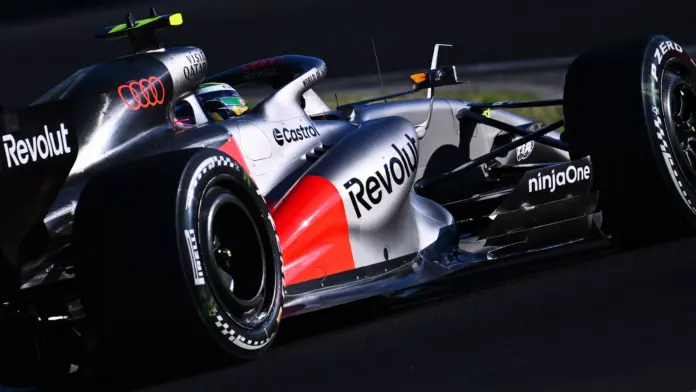
McLaren displayed a mix of promise and obstacles during Friday’s practice sessions at the Hungarian Grand Prix. Lando Norris recorded a strong performance, ultimately securing P3 in FP2 with a lap time of 1:19.228, while Oscar Piastri faced challenges, finishing P8 with a time of 1:20.101.
This weekend’s activities arrive amid a competitive landscape in the current Formula 1 championship, where McLaren has been progressively improving their performance yet remains greatly behind the leaders. The insights analysed here are sourced from official data provided by Formula 1’s official site.
Lando Norris: A Mixed Bag in Practice Sessions
Despite encountering difficulties in FP1, where he could not set a representative lap time due to running wide at Turn 11, Lando Norris bounced back in FP2. He expressed satisfaction with the new rear wing’s effects on the car, stating, “We know we’re not going to catch the guys ahead immediately, so we need to keep working hard.” His P3 finish in FP2 reflects a promising trajectory for McLaren as they continue to assess their updated components.
Oscar Piastri: Finding Rhythm Amid Challenges
Oscar Piastri faced a steeper climb during Friday’s sessions, registering P8 in FP2 after dealing with high winds and low grip conditions. He acknowledged the challenges of adapting quickly to changes in the track’s surface but remained optimistic about potential improvements for Saturday’s Qualifying. His reflection that “The new parts seem to be working as expected on Lando’s car” highlights the importance of data assessment as they prepare for further refinements.
Leonardo Fornaroli: Stepping Up in FP1
Leonardo Fornaroli showcased commendable performance during his stint in FP1, achieving P16 with a time of 1:21.890 after completing 29 laps. His key takeaway was the positive function of the new components introduced by McLaren, coupled with a lock-up that he deemed a important learning experience. Fornaroli’s contributions are viewed as instrumental for the team’s ongoing development and the setup adjustments for Piastri.
Randy Singh: Optimism for Competitive Edge
Randy Singh, McLaren’s Senior Director, conveyed optimism following the day’s results, emphasising the importance of the reliable performance of new components despite the real gap to the frontrunners. His assessment that “every new component we brought to the track performed as we expected” reinforces the positive outlook for McLaren’s ongoing engineering developments aimed at closing the performance deficit.
The SportiveNews view
McLaren’s varied performances during Friday’s practice lay a mixed yet hopeful groundwork for the weekend. Norris’ encouraging speed in FP2 indicates potential competitiveness in the upcoming Qualifying. Conversely, Piastri’s challenges reflect the pressing need for meticulous data analysis. The team’s progress with the new components reinforces their trajectory, although they must bridge the real gap to challenge the frontrunners effectively.
Frequently asked questions
What were the main challenges faced by Oscar Piastri during FP2?
Oscar Piastri struggled to find a rhythm during FP2 due to challenging track conditions influenced by high winds and low grip on the newer sections of the circuit. He acknowledged that adapting to these factors was key to gathering meaningful data for performance improvements.
How effective were the new components introduced by McLaren?
According to team director Randy Singh, the new components functioned as anticipated, as evidenced by Lando Norris’ performance. Piastri noted he was eager to test these upgrades fully in Saturday’s sessions, suggesting the revisions may enhance the car’s performance and competitiveness.