
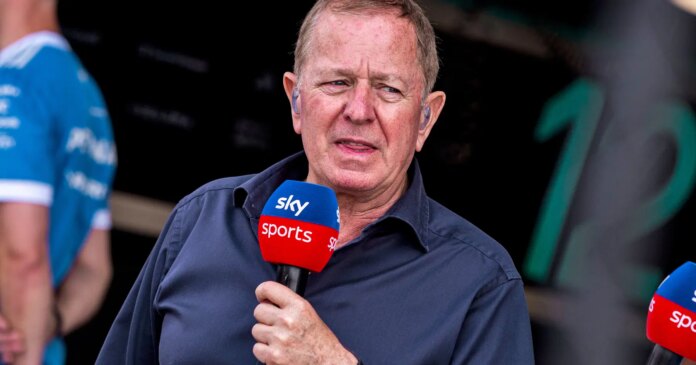
Martin Brundle has expressed real discontent regarding Formula 1’s 2026 regulations, particularly their ramifications on racing at historic tracks like Silverstone and Spa-Francorchamps. Reflecting on recent outings at these legendary venues, Brundle laments that the thrill intrinsic to these circuits has diminished due to the complexities brought about by the new car designs.
As Formula 1 navigates the challenges of its evolving regulations within the current championship context, Brundle’s critique serves as a valuable observation. Featured in a recent segment on Sky F1, he highlights a growing consensus among drivers who feel the excitement has been suffocated by a reliance on intricate energy management protocols.
The lost excitement at iconic venues for Brundle
Brundle’s heartache stems from a palpable sense of nostalgia, emphasising that the exhilarating corners of Silverstone and Spa are losing their impact. He stated, “I’ve got a bit of a tear in my eye because we’ve lost all the great corners at Silverstone,” contrasting the changes with the lineage of racing these tracks represent. This sentiment resonates deeply with fans and drivers alike who have cherished the fast-paced nature of these circuits.
Drivers struggling with the complexities of new regulations
In his assessment, Brundle noted that the current generation of drivers is grappling with the intricate energy management systems. He remarked, “I think they’re all struggling to really fully understand it,” reflecting on the learning curve and the challenges athletes face in maximising performance amid these constraints. This shift to energy-dependent racing necessitates a focus on harvesting and deploying energy, complicating the once straightforward competitive roles of pushing the limits.
Future regulatory shifts and their implications for racing
Looking ahead, the FIA has recognised the concerns surrounding the regulations and plans to recalibrate the balance between internal combustion and electric power. Changes set for 2027 will see the split shift to 58% internal combustion and 42% electric, followed by a further adjustment in 2028. However, Brundle believes that merely adjusting these ratios is insufficient and advocates for a complete overhaul by 2030 or 2031.
The SportiveNews view
The ongoing evaluation of Formula 1’s regulatory framework points to a fundamental shift needed in how racing is approached, especially at high-speed circuits. Brundle’s insights reflect a broader dialogue within the sport. A recalibration away from intricate energy strategies could reinvigorate the excitement that has historically characterised high-profile races.
Frequently asked questions
What are Brundle’s main concerns regarding the 2026 regulations?
Brundle has publicly lamented the loss of excitement at contest tracks due to new regulations that demand complex energy management. He feels these changes have adversely affected the thrilling racing experience historically associated with venues like Silverstone and Spa-Francorchamps.
What shifts in power distribution are planned for future regulations?
The FIA has acknowledged the need for regulatory adjustments, with a plan to modify the power split between internal combustion engines and electric power to 58% and 42% in 2027, then shifting to 60/40 in 2028. These changes aim to reduce the level of electric dependency and may address some concerns highlighted by drivers.