
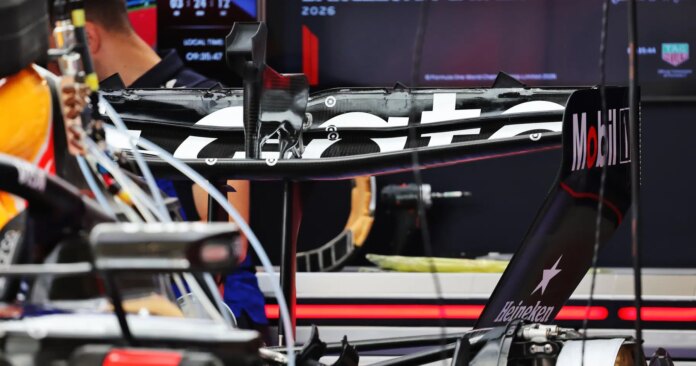
Max Verstappen and the Red Bull Racing team will face real performance challenges at the upcoming Belgian Grand Prix, as the outfit has chosen not to deploy its ‘Macarena’ rear wing at the Spa-Francorchamps circuit. This decision stems from recent incidents where aerodynamic issues led to a dangerous loss of rear grip during high-speed corners, prompting critical adjustments ahead of this weekend’s race.
As the FIA World Championship progresses, this call reflects ongoing scrutiny about Red Bull’s wing design. Following incidents in Austria and Britain, where Verstappen struggled with the movable flap’s malfunction, the team is prioritising safety and reliability over potential speed advantages. This evolution comes as Red Bull seeks to maintain its competitive edge amid evolving technical regulations, as reported by GPToday.com.
Max Verstappen Reassesses Performance Amidst Wing Changes
Verstappen acknowledged the implications of reverting to the old-spec rear wing during the pre-race FIA press conference at Spa. His admission highlighted concerns over reduced top speed, particularly on straights, which could hinder their overall performance this weekend.
Engineering Challenges Behind Red Bull’s Wing Adjustment
The decision to sideline the ‘Macarena’ rear wing arose from an investigation prompted by the FIA. The issue lies in the single actuator mechanism that controls the flap, which proved ineffective under specific aerodynamic pressures. Red Bull’s engineering team is actively working on modifications to ensure the closing mechanism performs reliably, avoiding the issues witnessed at both Spielberg and Silverstone.
Performance Impact of the Old-Spec Wing for Red Bull
The performance ramifications of using the older rear wing configuration are likely to be pronounced. Red Bull anticipates a loss of up to nine km/h on the Raidillon straight, with a reduction of approximately six km/h in the high-speed Blanchimont section. This adjustment could pose real challenges for Verstappen, limiting his ability to maintain pace against competitors, particularly in critical track sections.
The SportiveNews view
The implications of Red Bull’s decision to abandon the ‘Macarena’ wing at Spa may be far-reaching. With Verstappen’s performance potentially hampered by notable speed reductions on key sections of the circuit, Red Bull must navigate this technical setback judiciously. The upcoming races will be important in determining how these modifications influence their championship trajectory.
Frequently asked questions
What prompted Red Bull’s decision to not use the ‘Macarena’ rear wing?
The decision was based on two notable incidents involving Max Verstappen, where a failure in the movable flap’s closing mechanism resulted in dangerous aerodynamic instability during high-speed corners. As a precaution, Red Bull opted to revert to an older wing specification at Spa.
How will the change in rear wing affect Verstappen’s performance at Spa?
The old-spec rear wing will result in a measurable performance hit for Verstappen, with expected losses in top speed on straights. Estimates suggest a reduction of up to nine km/h on the Raidillon straight and around six km/h on the Blanchimont section, impacting his overall competitiveness this weekend.
For more insights into Red Bull and other teams, visit our Formula 1 coverage and stay updated on latest technical updates from the paddock.