
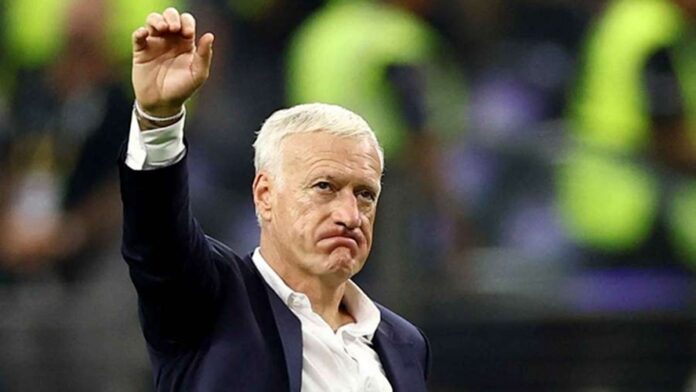
In a tactical lesson in Dallas, Spain emerged victorious over France with a 2-0 scoreline in their World Cup semifinal. The match illustrated the disparity in control as Didier Deschamps’ side, known for their attacking prowess, struggled to get a foothold in the game and managed only three shots on target throughout the contest.
This clash was crucial as both teams looked towards the Champions League landscape, with former coach Deschamps set to depart the French national setup. According to Soccer News, France’s inability to find a clear identity in this match has raised real questions about their strategic approach moving forward.
France’s Conflicting Tactical Approach
Deschamps opted for a midfielder duo of Aurelien Tchouaméni and Adrien Rabiot paired with Michael Olise, suggesting a desire to maintain possession. However, against a technically superior Spanish side, this lineup proved inadequately equipped for the task. While Olise was capable of creating opportunities, Rabiot and Tchouaméni lacked the finesse needed to break through Spain’s tight midfield press, leaving France’s attack starved for chances.
Missed Opportunities in Squad Selection
France supporters might look back in frustration, as alternatives existed that could have potentially changed the game. A front trio of Desire Doue, Olise, and Rayan Cherki could have posed different issues for Spain, given their comfort under pressure and ability to manipulate tight spaces. Instead, the lack of creativity in the attacking third allowed Spain to maintain control and stifle potential threats.
The Directness France Could Have Embraced
Had France opted for a more direct and vertical game, leveraging the speed of players like Kylian Mbappé, Ousmane Dembélé, and Bradley Barcola, they could have exploited the spaces left by Spain’s high defensive line. Unfortunately, they often chose to engage in a protracted possession battle that played into Spain’s strengths, further illustrating the disconnect between their tactics and player capabilities.
Spain’s Midfield Mastery
Spain’s midfield unit, featuring Rodri, Fabian Ruiz, and Dani Olmo, was dominant throughout the match. Their well-coordinated pressing, alongside effective possession circulation, ensured that France’s key wingers were consistently neutralised. The goals came from sustained pressure, as seen with Mikel Oyarzabal converting a penalty and Pedro Porro sealing the win with a second-half strike. While Deschamps faced criticism for squad selection, the overall quality displayed by Spain reaffirmed their position as one of the tournament’s top teams.
The SportiveNews view
This match has left France at a crossroads as they prepare for the next chapter under fresh management. The lack of identity and effective strategy against Spain casts a shadow over their future in the Champions League. Without a clear game plan, their path forward remains uncertain.
Frequently asked questions
What went wrong for France against Spain?
France struggled to connect their midfield to attack, primarily due to a tactical setup that lacked clarity and adaptability. Deschamps selected players not suited to compete with Spain’s seniority in midfield, limiting France’s ability to create chances.
What alternatives did Deschamps have against Spain?
Supporters felt Deschamps overlooked players like Rayan Cherki, Desire Doue, and Olise, who could have provided the technical calibre needed. Their inclusion might have allowed France to challenge Spain’s midfield more effectively.
Source: Based on reporting from Soccer News. SportiveNews rewrote and analysed the story independently for football readers.
More from SportiveNews: Champions League coverage · Premier League news