
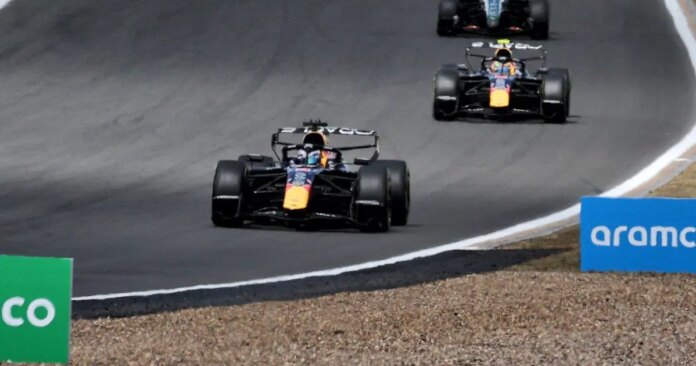
Red Bull Racing now faces real challenges regarding their innovative rear wing, following severe performance failures with Max Verstappen at both the Austrian and British Grands Prix. The wing, designed to optimise aerodynamic efficiency, has raised concerns about safety after incidents that stripped downforce and resulted in notable crashes, compelling Red Bull to consider urgent modifications ahead of the Belgian GP.
As Formula 1’s technical landscape continually evolves, this season has spotlighted the Macarena rear wing, initially introduced by Ferrari during Bahrain pre-season testing. The unique design allows for improved straight-line speed but has become a liability for Red Bull, according to sources from gptoday.com.
Verstappen’s Frustration Following Dual Incidents
During the Austrian GP qualifying session, Verstappen experienced a real incident when the rear wing actuator malfunctioned, preventing the wing from closing adequately through corners. This failure culminated in a spin and ultimately a crash, prompting an apology from the team. Again, at Silverstone, despite overcoming various issues, Verstappen faced a similar mechanical failure, leading to another high-speed off-track moment that he deemed “particularly dangerous.”
Assessing the Macarena Wing’s Impact on Performance
This wing initially provided Red Bull with a competitive edge, contributing to high-speed performances throughout the early season. However, recent failures have raised questions regarding its reliability and safety. The wing’s backward-rotating design has allowed for enhanced straight-line performance, but it now appears to pose risks that could severely impact both driver safety and championship contention.
Red Bull’s Strategy Ahead of Belgian GP
As the team prepares for the upcoming Belgian Grand Prix at Spa-Francorchamps, which is renowned for its high-speed layouts, Red Bull is under pressure to reassess the wing’s design. With the FIA reportedly engaging with both Red Bull and Ferrari regarding the wing’s compliance with safety regulations, decisions on whether to retain or modify the component are critical. Laurent Mekies has not excluded the possibility of removing the wing entirely, reflecting the urgency of the situation.
The SportiveNews view
The recent failures of Red Bull’s rear wing have transformed a performance asset into a potential liability, especially as the team navigates the challenges of the championship’s demanding circuits. Moving forward, any decisions regarding modifications must carefully balance aerodynamic advantages against safety considerations, particularly with races at high-speed tracks looming on the calendar.
Frequently asked questions
What caused the rear wing failures for Red Bull at recent Grands Prix?
The actuator mechanism on the rear wing failed during both the Austrian and British Grands Prix. This malfunction prevented the wing from closing correctly through corners, resulting in real downforce loss and ultimately leading to crashes.
What actions might Red Bull take regarding the rear wing before the Belgian GP?
Red Bull is actively assessing the design of the Macarena rear wing and has not ruled out its complete removal. Following discussions with the FIA regarding safety standards, the team will likely implement corrective measures before the next race to ensure driver safety and performance reliability.
For more insights, please explore our comprehensive Formula 1 coverage or the latest technical updates from the paddock.