
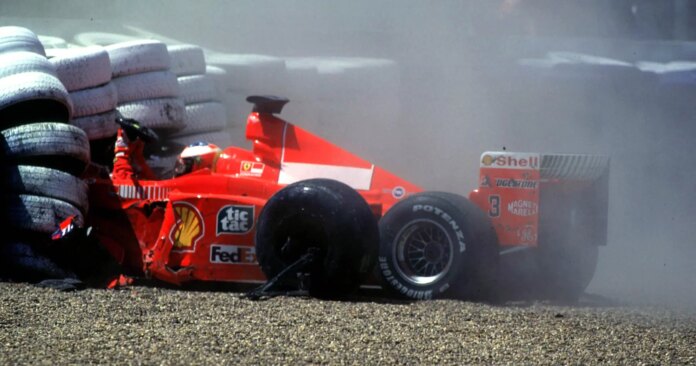
On 11 July 1999, Michael Schumacher’s Ferrari was involved in a harrowing incident during the British Grand Prix, culminating in a serious leg injury due to a catastrophic rear brake hydraulic failure. As he approached the high-speed Stowe corner, the car’s rear brakes failed entirely, leading to a disastrous crash into the tyre barrier. This moment is etched vividly in Formula 1 history, highlighting the sport’s inherent risks and the fragility of a championship campaign.
At that juncture in the 1999 season, the championship standings were intensely competitive, with Mika Hakkinen leading on 40 points, closely followed by Schumacher and his teammate, Eddie Irvine, at 32 each. The unexpected brake failure not only sidelined Schumacher but reshaped Ferrari’s strategic outlook for the remainder of the season, as the team shifted its focus entirely towards Irvine’s title chase, as reported by GPToday.
The catastrophic failure that changed everything for Schumacher
As Schumacher navigated the fast-straight approach to Stowe, the Ferrari’s rear brakes let him down, leaving him with only front brake functionality. The resultant skid sent him careening into the gravel and ultimately into a barrier at an alarming pace, resulting in severe damage to the car. The severity of the accident required immediate medical attention, drawing from the broader narrative of how mechanical failures can drastically alter race outcomes and titles.
Title hopes dashed: Ferrari’s recalibrated strategy
With Schumacher out of the race following the accident, the Ferrari team swiftly recalibrated its championship strategy, having to lean on Irvine as their new leading contender. David Coulthard secured victory for McLaren, while Irvine’s second-place finish marked a real moment as the team redirected its efforts. This incident underlined the unpredictability of F1 campaigns, where a single moment can dismantle years of preparation.
Schumacher’s comeback: Resilience and teamwork
Following his traumatic injury, Schumacher underwent a lengthy recovery, missing six races before returning at the Malaysian Grand Prix. In a remarkable show of sportsmanship and teamwork, he secured pole position, then selflessly relinquished the win to boost Irvine’s championship chances. This act exemplified the collaborative spirit within Ferrari, even amid individual aspirations and rivalries.
The aftermath: A shifting dynamic in the championship
Despite Schumacher’s efforts, the season concluded with Hakkinen claiming the drivers’ championship, while Ferrari celebrated securing the constructors’ title. This incident, marked by Schumacher’s injury and the subsequent tactical shift, remains a poignant reminder of the unpredictable nature of Formula 1, shaping narratives that continue to resonate today.
The SportiveNews view
Schumacher’s accident profoundly impacted Ferrari’s season trajectory, not only altering driver focus but also highlighting the important nature of vehicle reliability in championship contention. The incident reflects broader themes in motorsport, where engineering failures can abruptly change the course of a title chase, pushing teams to reassess strategies on the fly.
Frequently asked questions
What caused Michael Schumacher’s crash at Silverstone?
Michael Schumacher’s crash was instigated by a rear brake hydraulic failure while he was approaching Stowe corner. With only the front brakes functioning, the car lost control and veered off, leading to a collision with a tyre barrier.
How did Ferrari change their championship approach after Schumacher’s injury?
Following Schumacher’s injury, Ferrari recalibrated its championship strategy, centring its efforts on Eddie Irvine as the key contender. This strategic pivot was important as the team sought to maintain its competitive edge in the constructors’ championship.