
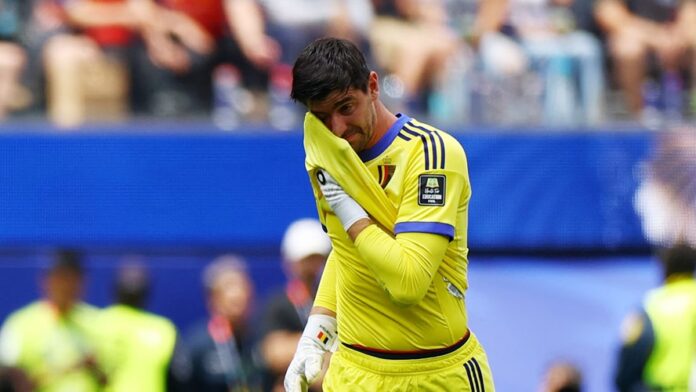
Spain’s 2-1 victory over Belgium on July 10 in the World Cup quarter-finals will be remembered for Mikel Merino’s late winner, but the match turned decisively in the 71st minute when Thibaut Courtois exited the pitch due to a thigh injury. Belgium was performing admirably at that stage, and the abrupt loss of their top goalkeeper broke their defensive resolve and contributed to their elimination.
The Champions League atmosphere looms large, with knockout stages often hinging on crucial moments and player fitness. Spain advanced in this crucial World Cup match, but the implications for both teams are felt within the broader context of international football. According to SoccerNews, this pivotal moment underscores the fragility of teams when reliant on key players.
Belgium’s Tactical Setup Before Courtois’ Exit
Belgium, facing real absences including Amadou Onana and Youri Tielemans, had successfully implemented a defensive strategy against a Spain side widely viewed as the tournament favourites. The plan was straightforward: maintain a compact defensive line, restrict access to central areas, and count on Courtois’ skills to thwart the Spanish attack. Up until the injury, this approach appeared effective, with Belgium showing great resilience while keeping the score level.
The Impact of Courtois’ Departure
Courtois, renowned for his goalkeeping prowess, had provided psychological security for Belgium. His presence compelled Spain to reconsider their attacking strategies throughout the match. Unfortunately, upon feeling pain after a long kick, Courtois could not continue, and the introduction of Senne Lammens shifted the balance. Lammens, though not to be blamed, found himself facing overwhelming pressure in a World Cup quarter-final against a superior opponent.
Understanding the Winning Goal
The focus often falls on Lammens’ error that allowed Merino to score the decisive goal, but attributing the defeat solely to this mistake is an oversimplification. The entire Belgian defensive structure crumbled without Courtois, leading through the subsequent vulnerability. The shot that produced the winning rebound was ultimately a product of Spain’s persistent pressure and territorial dominance in the match.
Spain’s Determination and Future Implications
Despite the circumstances, Spain’s performance should not be overlooked. Luis de la Fuente’s side consistently pushed forward, creating opportunities that ultimately culminated in the winning goal. In knockout football, unforeseen events can alter the match’s trajectory greatly, and Spain capitalised on their chance. Without the injury, the match might have taken a different course, potentially leading to extra time or penalties.
The SportiveNews view
Belgium’s exit from the World Cup serves as a stark reminder of how unpredictable football can be, particularly in high-stakes environments. The loss is not merely a tactical failure but a cruel twist of fate hinging on Courtois’ injury. Both teams will take lessons from this encounter as they look toward future competitions.
Frequently asked questions
What tactical changes did Belgium employ before Courtois’ injury?
Belgium adopted a compact defensive strategy, aiming to limit Spain’s access to central spaces and trusting Courtois to manage the chances created by their opponents. This plan had been effective until the goalkeeper’s injury.
How did Courtois’ absence affect Belgium’s performance?
Courtois’ departure not only removed their most experienced player but also destabilised Belgium’s entire defensive structure, leading to a loss of confidence and ultimately culminating in the conceding of the late goal.
Source: Based on reporting from SoccerNews. SportiveNews rewrote and analysed the story independently for football readers.
More from SportiveNews: Champions League coverage · Premier League news