
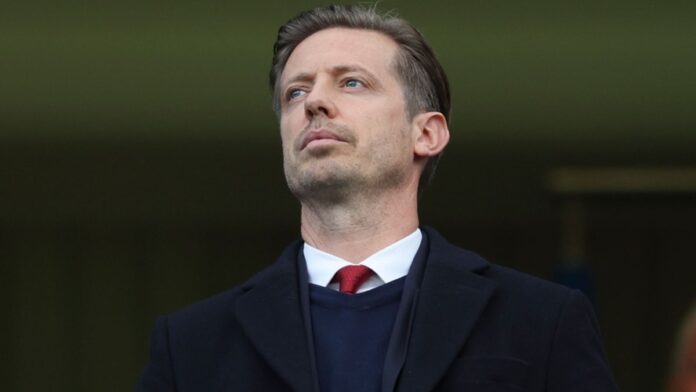
Liverpool is facing a fresh wave of uncertainty following Michael Edwards’ decision to resign from his position as Fenway Sports Group’s chief executive of football. His exit, occurring two years into a three-year contract, signals yet another real transition for the club amid ongoing changes in its football operations.
This shift arrives at a pivotal moment for Liverpool as the team prepares for the upcoming Champions League campaign. Edwards’ departure has been reported by SoccerNews, highlighting concerns over unresolved ambitions as the club navigates its future direction.
Edwards’ Frustrations Fuel Departure
The primary reason behind Edwards’ resignation appears to stem from dissatisfaction with the lack of advancement in FSG’s plans to establish a multi-club network. Having returned to the organisation in 2024 with aspirations to oversee a period of transition and expansion, he pursued several opportunities for club acquisitions. However, as discussions with clubs like Getafe and Bordeaux failed to yield results, Edwards ultimately opted to leave.
Mike Gordon’s Expanded Role
In the wake of Edwards’ exit, FSG president Mike Gordon is set to take on increased responsibilities for Liverpool’s football operations. Despite the uncertainty this change presents externally, insiders at the club maintain confidence in the solid foundations established in recent years. Liverpool’s recruitment framework and football philosophy are believed to be sound enough to ensure ongoing competitive success.
Hughes’ Future in Question
Edwards’ exit intensifies speculation surrounding sporting director Richard Hughes, who has been linked with a move to Saudi Pro League side Al-Hilal. With Liverpool reportedly unable to provide clear assurances regarding his future, questions loom as Hughes recently played a crucial role in appointing new head coach Andoni Iraola. As his contract runs until 2027, any potential departure would complicate matters for the club.
The Legacy of Michael Edwards
This marks the second occasion Edwards has left Liverpool, having previously served as sporting director and contributing greatly to the club’s achievements, including a Premier League title and a Champions League victory. His return in 2022 was marked by high expectations, yet his second tenure has been met with challenges, particularly in navigating the club’s transition from the Jürgen Klopp era.
The SportiveNews view
Edwards’ departure signals a crucial moment for Liverpool, as the club must now reassess its football strategy while remaining competitive on the European stage. With ongoing transfers and contract negotiations looming, the club’s leadership will play a vital role in ensuring they stay aligned with their ambitions in the Champions League.
Frequently asked questions
Why did Michael Edwards leave Liverpool?
Edwards’ departure was reportedly driven by frustrations over the stalled efforts to expand FSG’s multi-club ownership model, which included potential acquisitions of various European clubs.
What impact will Edwards’ exit have on Liverpool’s recruitment strategy?
Despite his departure, the club’s established transfer plans are expected to proceed as most of the framework for summer transactions has already been laid out by Richard Hughes and his team.
Who could replace Richard Hughes if he leaves Liverpool?
If Hughes were to depart, internal candidates such as David Woodfine, the assistant sporting director, or Julian Ward, the technical director, could be considered for a larger role based on their familiarity with the club’s operations.
Source: Based on reporting from SoccerNews. SportiveNews rewrote and analysed the story independently for football readers.
More from SportiveNews: Champions League coverage · Premier League news