
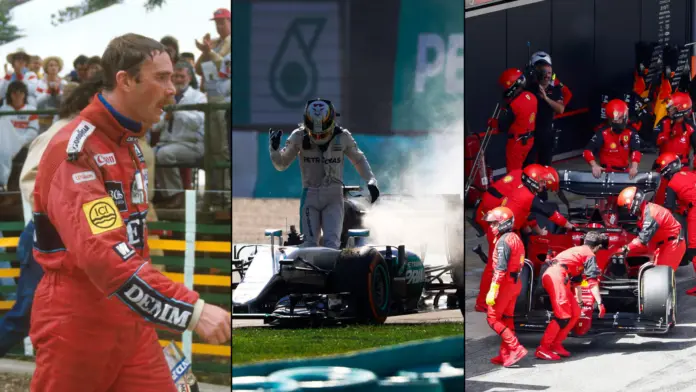
Kimi Antonelli and Mercedes faced a setback at the British Grand Prix when a mechanical issue with his W17 disrupted his race strategy. The left front wheel shield failure necessitated two extra pit stops, while a subsequent five-second penalty for exceeding track limits eliminated his chance of scoring points. This incident has tightened the championship race, leaving Antonelli’s lead over teammate George Russell at just 25 points.
This incident underscores the critical nature of reliability in the title chase, a theme richly illustrated throughout Formula 1 history. According to Formula1.com, mechanical failures have repeatedly reshaped championship outcomes, driving home the point that every point counts.
Lewis Hamilton’s 2016 Catastrophe: A Title Decided by Engine Failure
Lewis Hamilton’s 2016 season serves as a stark reminder of how quickly fortunes can turn in Formula 1. Locked in a fierce title battle with Nico Rosberg, Hamilton’s hopes were dashed at the Malaysian Grand Prix due to engine failure just 15 laps from the finish. Having commanded the race after a strong start, he was left helpless as his car emitted smoke and succumbed to mechanical failure, allowing Rosberg to extend his championship lead.
Kimi Raikkonen’s Trials: Multiple Failures in 2005
2005 proved to be a challenging year for Kimi Raikkonen, who found his title aspirations hindered by a slew of reliability issues. Following a tyre valve failure in Malaysia and a driveshaft problem at the San Marino Grand Prix, Raikkonen’s championship campaign began to unravel. Despite some victories later in the season, a hydraulics failure during a race in Germany sealed his fate, allowing Fernando Alonso to clinch the title.
Nigel Mansell’s 1986 Heartbreak: A Tire Blowout at the important Moment
The 1986 Australian Grand Prix is etched in the memories of motorsport fans due to Nigel Mansell’s dramatic retirement. Contending for the championship, Mansell needed merely a top-three finish to secure the title. However, a catastrophic left-rear tyre failure on the very lap he reclaimed the important position sent his aspirations spiraling, allowing Alain Prost to take the championship crown.
Charles Leclerc: The 2022 Mechanical Mishap that Shifted Momentum
Like Antonelli, Charles Leclerc experienced the harsh realities of mechanical misfortune during the 2022 season. After a promising start, leading the championship against Max Verstappen, Leclerc’s power unit failed while he was comfortably ahead in the race in Barcelona. This incident not only closed the championship gap but also marked a turning point that enabled Verstappen to take command of the standings.
The SportiveNews view
Antonelli’s recent mechanical failure underscores the real impact that reliability issues can have on a championship trajectory. With Mercedes aiming for a more competitive campaign, addressing these technical glitches is paramount, particularly as the title chase intensifies. This incident may catalyse an urgent need for development focus and increased reliability moving forward.
Frequently asked questions
How does mechanical reliability impact championship outcomes in F1?
In Formula 1, mechanical reliability can drastically influence championship standings, often dictating a driver’s momentum and overall performance. Instances of failures not only prevent points from being scored but can also lead to shifts in driver focus and team strategies.
Who are the key figures affected by reliability issues in recent seasons?
Several prominent drivers have faced real reliability issues affecting their championship bids, such as Lewis Hamilton in 2016 and Charles Leclerc in 2022. These moments have profoundly shaped their respective title challenges and overall standings within the sport.