
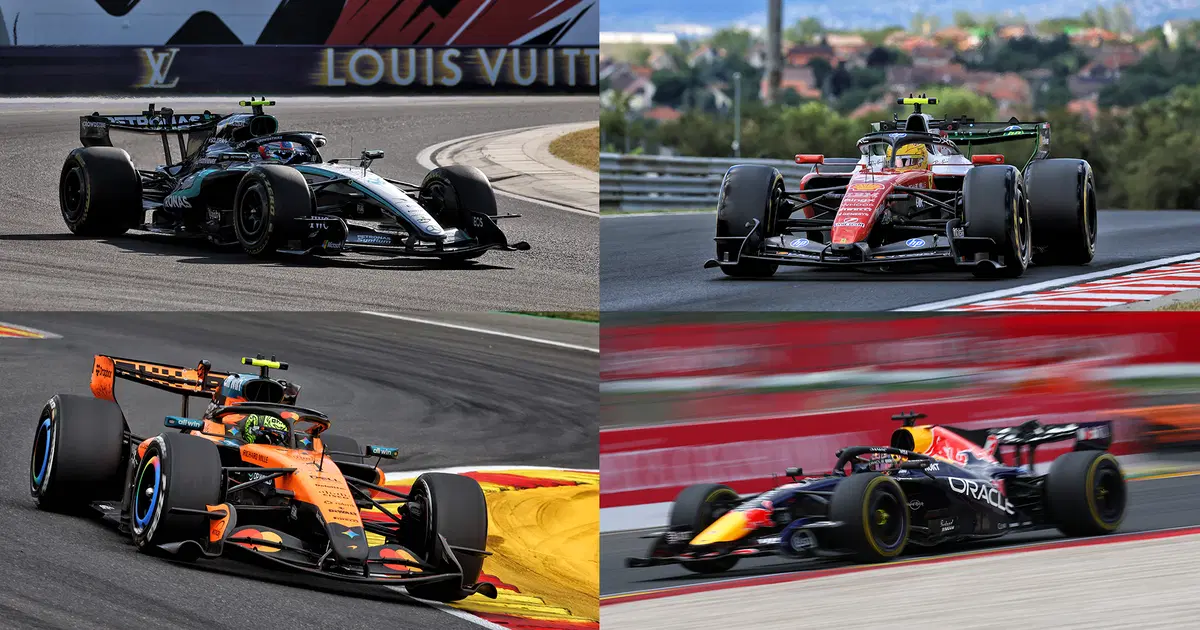
Ferrari has emerged as the important developer in the ongoing 2026 FIA World Championship season, showcasing robust advancements to the SF-26 across the early races. The team’s innovations, especially the Flip Tail Mode and the ‘Macarena’ rear wing, have greatly influenced the competitive landscape, prompting challenges for rivals like Red Bull and McLaren.
As the championship progresses and teams regroup during the summer break, insights gleaned from the initial races offer a glimpse into the prevailing technological trends. According to GPToday, these developments hint at the competitive dynamics shaping the remainder of the season.
Ferrari’s Pioneering Innovations with the SF-26
Ferrari has maintained a relentless pace in car development, with the SF-26 reflecting a series of strategic enhancements. The introduction of the Flip Tail Mode has been particularly noteworthy, effectively augmenting rear downforce by redirecting exhaust gases through a curved winglet. This innovative design was not merely mid-season experimentation but part of Ferrari’s foundational strategy from the very first race.
Also, the ‘Macarena’ rear wing has garnered attention for its versatility on various circuit types, allowing for efficient performance on both long straights and technical corners. The effectiveness of this feature, however, has posed replication challenges for competitors, as identified by both Red Bull and McLaren.
McLaren’s Evolution of the MCL40
In contrast, McLaren’s approach to the MCL40 underscores a cautious yet adaptive development path. Delivering a comprehensive upgrade package in Miami, the team enhanced its front wing in Canada. However, the real redesign of the car’s floor during the Hungarian Grand Prix marked the most impactful adjustment, aimed at improving overall aerodynamic load and balance.
The team is in the process of developing its version of the ‘Macarena’ rear wing, yet it remains a complex engineering challenge, reflecting Ferrari’s leading expertise in this area.
Red Bull’s Shift in Aerodynamic Philosophy with the RB22
Red Bull has seen profound changes in the RB22’s aerodynamic design, particularly with alterations made in Barcelona. The redesign of the sidepods has aligned Red Bull’s aerodynamic principles more closely with McLaren’s while integrating elements inspired by Ferrari. Also, a mini-flap introduced above the rear-wing actuator fairing addresses rear downforce deficiencies, showcasing a tactical evolution in their design approach.
Further internal adjustments to radiator inlets and ducting during the Austrian Grand Prix have been important, indicating a commitment to improving performance beyond mere external bodywork.
Mercedes Refinement of the W17’s Floor Design
Throughout the season, Mercedes has incrementally fine-tuned the W17, particularly enhancing elements like bargeboards and front wings. The most real technical advancement occurred at the Canadian Grand Prix with a comprehensive overhaul of the floor, where modifications aimed at optimising airflow management and enhancing the diffuser’s efficiency were implemented.
These efforts reflect Mercedes’ ongoing dedication to reclaiming competitive parity within the field as they adapt to the evolving technical landscape.
The SportiveNews view
The development trajectories established by Ferrari, McLaren, Red Bull, and Mercedes will greatly impact their championship ambitions. Ferrari’s innovations provide a blueprint that other teams struggle to replicate, while McLaren’s cautious upgrades could prove important as the season progresses. Red Bull’s shifts indicate a willingness to adapt, and Mercedes’ ongoing refinements suggest they remain a strong force despite recent challenges.
Frequently asked questions
What is Flip Tail Mode and how does it improve performance for Ferrari?
Flip Tail Mode is an innovative design feature on the Ferrari SF-26 involving a curved winglet that directs hot exhaust gases beneath the rear wing, increasing rear downforce. This characteristic enhances the car’s stability and grip during races and was integrated from the season’s outset, showcasing Ferrari’s forward-thinking design approach.
How has McLaren’s floor redesign affected the MCL40?
The recent redesign of the MCL40’s floor during the Hungarian Grand Prix aimed to improve aerodynamic load and balance, addressing longstanding performance weaknesses. By enhancing the forward section and rear wheel area, McLaren seeks to optimise downforce, important for navigating diverse circuit configurations effectively.
For comprehensive insights into the latest technical updates in Formula 1, visit our Formula 1 coverage and stay updated on the latest technical updates.