
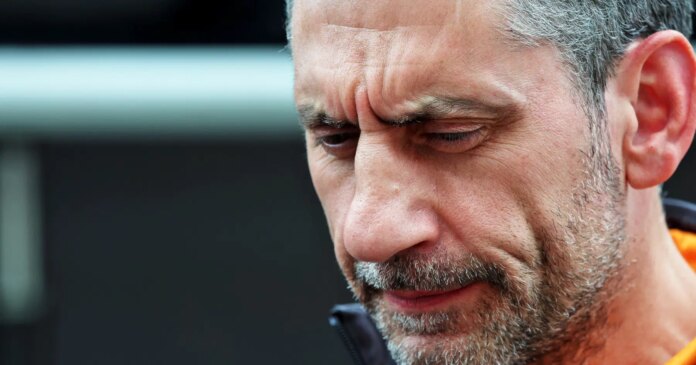
McLaren team principal Andrea Stella has described the April break in the Formula 1 calendar as a important moment for the Woking-based outfit. He refers to this pause not just as a disruption but as a paradox that ultimately facilitated important reassessment of their performance and development direction.
Entering a five-week hiatus between the Japanese and Miami Grands Prix, McLaren had been grappling with a challenging start to the new regulations, facing reliability issues and struggles for competitiveness against Mercedes. According to the source, this prolonged absence, caused by the security situation in the Middle East leading to event postponements, allowed the team invaluable time for introspection.
The April Break: A Rare Opportunity for McLaren
Stella emphasised that it wasn’t merely a single upgrade or race that spurred McLaren’s recovery. Instead, the enforced hiatus enabled the team to address the challenges surrounding the MCL40 comprehensively. “It was a growing awareness of the scale of the challenge we’re facing and the adjustments we needed to make,” he stated, highlighting how the break was utilised to focus on performance analysis rather than racing.
Power Unit Troubles: Assessing the Complexities
The team faced real issues with the Mercedes HPP power unit, including multiple electrical failures that affected both drivers and hindered competitiveness against the Mercedes works team. Stella reaffirmed that while Mercedes was not entirely accountable for the challenges faced, operating as a customer team complicated their efforts to optimise reliability. This became a focal point during the April stoppage as well.
Revised Development Approach: Evidence of Change
McLaren’s strategic pivot became evident at the Hungarian Grand Prix, where a comprehensive aerodynamics package was introduced. This development aimed to rectify the weaknesses highlighted during the early races, including improvements in braking and cornering performance. Following these upgrades, Lando Norris not only secured pole position but also claimed his first victory of the season, further demonstrating the effectiveness of the revised approach.
Continuing Challenges for McLaren with Power Units
Stella has indicated that while progress has been made, fine-tuning the Mercedes power unit remains a complex issue that is not easily resolved, and will likely continue to pose challenges ahead of the 2026 season. “Optimising the power unit will remain a complex issue throughout the 2026 season,” he remarked, underscoring the ongoing nature of this challenge as the team aims to close the performance gap.
The SportiveNews view
The developments emerging from McLaren during this period signal a important moment for the team’s trajectory in the championship. The ability to capitalise on an unexpected break demonstrates resilience and adaptability, which will be important as they strive for an upward trend in competitiveness. The upgrades introduced reveal a calibrated response to specific deficiencies, laying a promising groundwork for future races.
Frequently asked questions
What did Andrea Stella highlight as real during the April break?
Stella emphasised that the April hiatus allowed McLaren to critically analyse the MCL40’s performance, adjusting development strategies in ways that were not possible during the racing schedule.
How has McLaren’s experience with the Mercedes power unit impacted their performance?
Stella noted that operating as a customer team added complications in addressing reliability issues with the Mercedes power unit. This complexity necessitated further understanding and optimisation throughout their development process.
For in-depth information on the sport, visit our Formula 1 coverage. To stay updated on technical developments, check out our latest technical updates.