
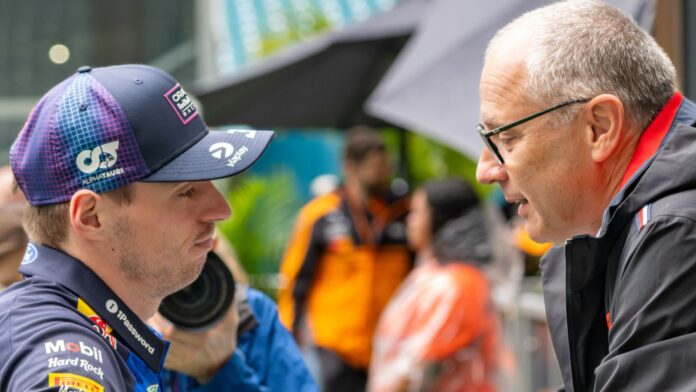
Stefano Domenicali, President of Formula 1, has addressed the ongoing criticism surrounding the sport’s power unit regulations slated for 2026, asserting that drivers are entitled to their opinions. This comes as prominent figures such as Max Verstappen have raised concerns over the current rules, which have altered driving styles and race dynamics.
Verstappen has labelled the “yoyo” style of racing—characterised by frequent overtakes and counter-overtakes—as “anti-racing.” His comments sparked a mix of support and pushback from the F1 community, laying bare the growing dissatisfaction with the current framework. As the series heads into its next season, the stakes remain high amid shifting public sentiment and driver feedback, as reported by GPToday.
Max Verstappen’s Concerns on Driving Dynamics
In a candid assessment following the recent races in Hungary and Belgium, Verstappen emphasised the limitations imposed by possessing reduced horsepower—a condition he described as “painful” and contrary to the sport’s typical excitement. He expressed frustration over his repeated critiques being initially dismissed, suggesting an increasing awareness among fans and fellow drivers about the future direction of F1 racing.
Domenicali Advocates for Open Dialogue
Domenicali acknowledged the drivers’ frustrations while emphasising a preference for resolving issues privately. He highlighted the necessity for all opinions to be constructive and aimed at fostering dialogue within the sport, asserting, “We are not here to tape anyone’s mouth.” His comments underline F1’s evolving culture where driver input is considered important for improving the sport moving forward.
The Future of F1 Regulations: Changes Ahead
With the current power unit configuration nearing a 50-50 split between internal combustion and electrical power, the FIA has outlined plans for revised configurations of 58-42 for 2027 and 60-40 for 2028. This decision has somewhat alleviated Verstappen’s initial concerns about the direction of the regulations, though uncertainty around team dynamics persists.
F1’s Growth Amid Regulatory Discussions
Domenicali pointed to record attendance figures at recent races, reflecting F1’s burgeoning popularity, despite the ongoing regulatory debates. He cited a conversation with filmmaker George Lucas, who expressed that many fans are more interested in the excitement on track rather than technical intricacies, reinforcing the need for F1 to ensure the sport remains accessible and thrilling for all audience types.
The SportiveNews view
The current discourse surrounding F1’s power unit regulations is indicative of a important moment for the sport as it strives to balance technical innovation with fan engagement. The shift in the power unit ratio for the next few seasons underscores a commitment to evolve while addressing valid concerns raised by high-profile drivers like Verstappen. The manner in which F1 navigates these changes will be important for maintaining its allure and competitive edge.
Frequently asked questions
What has Max Verstappen said about the current power unit regulations?
Max Verstappen has expressed strong dissatisfaction with the current power unit regulations, labelling the new driving dynamics as “anti-racing.” He has articulated concerns regarding the reduced horsepower and its impact on the excitement of racing, suggesting these issues have been overlooked by some within the sport.
How does Stefano Domenicali view driver feedback regarding regulations?
Stefano Domenicali appreciates the diverse opinions of drivers and emphasises the importance of constructive dialogue over criticism. He advocates for discussions that aim to improve the sport rather than silence dissent, marking a shift towards a more open communication approach in F1.
For the latest on Formula 1 coverage, visit Formula 1 coverage. Further insights into potential driver market changes can be explored at driver market rumours.