
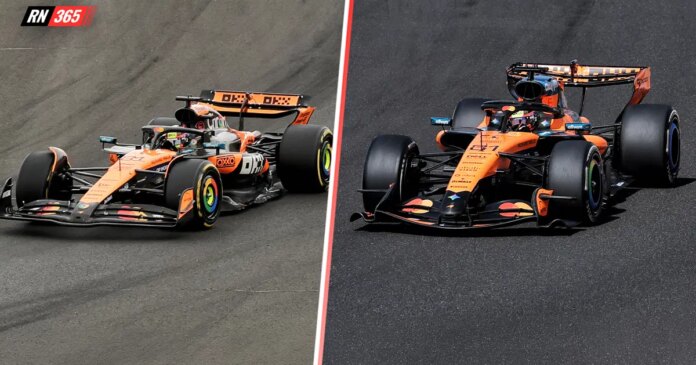
Formula 1’s engineering landscape continually showcases a fascinating paradox: cars often exhibit striking similarities across different eras. McLaren’s MCL40, for example, retains recognizable attributes from its predecessors, a trend also mirrored in the Red Bull family lineage. Despite evolving regulations, teams frequently grapple with persistent vehicle characteristics, hinting at deeper developmental philosophies.
This ongoing phenomenon is underscored by insights from Neil Houldey, McLaren’s technical director for applied engineering. In a candid revelation, he noted, “We ask ourselves this internally, and honestly, I’m not sure we get all the answers, but it’s really interesting.” His comments highlight the intricate interplay between driver preferences, computational fluid dynamics (CFD), and established wind tunnel methodologies that shape a car’s evolution.
Understanding Persistent Traits in McLaren Cars
The McLaren MCL40 exemplifies how historical design traits can endure through successive models. Houldey explained that the team’s reliance on specific aerodynamic solutions stems from their consistent developmental outlook. “If we produce a car that always does XYZ, it’s probably because we always do ABC in development, because we think ABC is the right thing to do,” he stated. This signifies that, irrespective of changing regulations, teams may inadvertently develop cars that echo past designs due to their entrenched processes.
Red Bull’s Design Philosophy Across Eras
Laurent Mekies, Red Bull’s team principal, also addressed the challenges of understanding vehicle performance within a legacy framework. He articulated the necessity of assessing the RB21’s weaknesses before progressing into the design of the RB22. “We needed to understand why it’s not performing because, fundamentally, we’ll be using the same tools, the same process, the same methodologies next year,” he emphasised. This reiteration underscores how important it is for teams to internalise their design methodologies, even as regulations shift.
Williams’ Battle with Their Car’s DNA
Conversely, this recurring theme is not necessarily welcomed by every team. Alex Albon highlighted Williams’ ongoing struggles with the FW48, essentially labelling them as “genetic DNA problems.” He noted, “We know the weaknesses of the car, we know the direction, and the work that’s been done at the factory is the biggest effort I’ve seen from the team to fight these genetic DNA problems it has.” His remarks indicate how teams are not just upgrading their machinery, but are instead engaging in a foundational effort to avoid repeating past mistakes.
The Bigger Picture: Tools and Methodologies Affecting Performance
The persistent characteristics of Formula 1 cars raise a critical point about the use of simulation and engineering methodologies. As Houldey elaborated, if the teams’ tools possess intrinsic biases, favouring certain design philosophies, the resultant vehicles will likely share striking similarities. “We see where lap time performance can be found and develop our car in those directions,” he mentioned, pointing to how strategic decisions can shape car lineage year after year.
The SportiveNews view
This phenomenon reveals a fundamental truth about Formula 1’s engineering culture: although cars may evolve under new regulations, their inherent design philosophies often remain unchanged. For teams such as Williams, addressing these historical issues is important to avoid perpetuating weaknesses in future models, particularly as they eye advancements for the 2027 season.
Frequently asked questions
Why do F1 cars share design traits across different eras?
Teams often utilise the same simulation environments and wind tunnel practices, leading to consistent design philosophies. Neil Houldey from McLaren noted that inherent biases in these tools can result in cars sharing recognisable characteristics, irrespective of regulatory changes.
What challenges do teams face with persistent car weaknesses?
For teams like Williams, persistent weaknesses are seen as “genetic DNA problems.” Alex Albon commented on the real efforts being made to ensure that future models do not inherit these traits, which highlights a critical focus on addressing historical shortcomings.
Formula 1 coverage is important for understanding these dynamics, while teams continue to confront their unique challenges. Further developments can be tracked with our latest technical updates.