
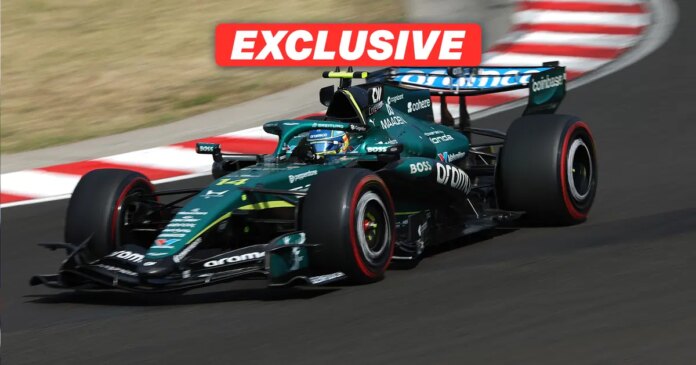
Honda has expressed pride in its recovery efforts following the challenging start to its partnership with Aston Martin in Formula 1. Despite expectations of competitiveness, the initial phase of the collaboration was marred by technical issues, particularly with the reliability and performance of the power unit. Honda’s chief engineer, Shintaro Orihara, described the situation as a “big shock” as the team faced unexpected hurdles throughout the 2026 season.
As the championship progresses, Honda’s re-entry into F1, alongside Aston Martin, has been under intense scrutiny. This partnership was anticipated to leverage Honda’s hybrid era successes, which powered Max Verstappen to multiple titles. However, it has instead been a tumultuous journey filled with reliability problems and performance deficiencies, primarily documented by gptoday.com.
Honda’s Struggles with Performance and Reliability
Honda’s collaboration with Aston Martin to produce a competitive power unit has not materialised as expected, experiencing real challenges at the outset of the 2026 season. Persistent vibration issues linked to the battery and ongoing reliability concerns left the team struggling at the lower end of the grid. By mid-season, Aston Martin found itself engaged in tight battles with newcomers, such as Cadillac, which was a situation far from their initial ambitions.
The severity of the vibration problems led Aston Martin to worry about potential harm to its drivers, Fernando Alonso and Lance Stroll. This predicament prompted now-candid reflections from Orihara, who noted that while anticipating difficulties, the reality of the performance gap was However shocking.
Acknowledging the Difficulties
Orihara’s honesty underscores the sharp contrast between the expectations set for the partnership and the reality experienced during early testing sessions. He revealed that concerns about performance were evident long before pre-season tests and the opening race in Melbourne. The team’s struggles were not sudden but rather a gradual decline observed since January, leading to troubling predictions for the early part of the season.
Given Aston Martin’s pre-season struggles, the early races were used predominantly for development rather than competitive success. The team’s primary focus has, therefore, been finding and rectifying the root causes of its fundamental issues, as illustrated by Chief Trackside Officer Mike Krack’s comments on prioritising problem-solving over outright speed.
Hope Amid the Challenges for Aston Martin
Recent updates have provided a glimmer of hope, with Aston Martin’s performance improving at the Hungaroring, thanks to real advancements in the chassis design. The expected introduction of additional development opportunities from Honda is also fostering optimism. Orihara’s confidence in the team’s potential to recover effectively hints at a turning point that could yield more consistent performances moving forward.
As the team prepares for the next race in Zandvoort, both Honda and Aston Martin are set to realise critical upgrades intended to enhance performance. These modifications are part of a planned strategy to regain competitiveness and reliability, helping the team move beyond its challenging start to the season.
The SportiveNews view
The journey of Honda and Aston Martin highlights the complex nature of adapting to new regulations in Formula 1. While the initial setbacks were disheartening, both teams appear to be laying a foundation for future success. The improvements seen recently suggest that with focused development, Aston Martin can pivot from a disappointing start to being genuine contenders as more enhancements come online.
Frequently asked questions
What were Honda’s primary issues at the start of the season?
Honda faced real vibration issues with their power unit’s battery, compounded by reliability problems and a general lack of performance. This led to Aston Martin struggling in the early races of the 2026 season.
How is Aston Martin adapting to these challenges?
Aston Martin’s approach has been to focus on understanding and addressing the causes of their performance issues rather than merely chasing speed. Recent updates in chassis design have shown positive results, indicating a potential shift in their trajectory.
For more insights, visit our Formula 1 coverage and stay updated with the latest technical updates.