
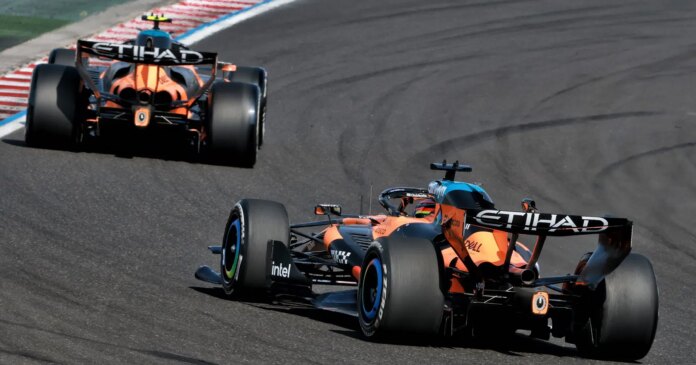
McLaren’s technical director for performance, Mark Temple, has offered a striking analogy to illustrate the complexities of navigating the new F1 regulations. These adjustments have produced not just a shift in aerodynamics but also a fundamental reconfiguration of the power units, greatly affecting the team’s performance this season.
Entering the 2026 season after eleven rounds, the evolution of engine technology and car design has sparked intense discussions in the paddock. According to a recent report by GPToday, McLaren is facing a particularly challenging set of circumstances as they adapt to these changes.
McLaren’s Perspective on Chassis Evolution
Temple highlighted the similarities and differences between the new chassis and its predecessors, stating, “Broadly speaking, from the chassis side, we’ve still got four black, round tyres.” He elaborated that while the vehicle’s aerodynamic features are distinct, they still adhere to the foundational elements of previous models. The active front and rear wings are a notable shift from the traditional DRS system, enhancing both performance and complexity.
Radical Changes in Power Units
The introduction of the new power unit marks a real departure from the norm, with Temple comparing this transformation to the experience of tasting corn tortilla chips for the first time. The elimination of the MGU-H and an increased output from the MGU-K to 350 kW requires an entirely different approach to energy management. This reality is proving to be a considerable hurdle for drivers such as Lando Norris, who expressed frustration after qualifying at the Australian Grand Prix.
Driver Reactions to the New Technical Landscape
Both McLaren drivers have shared their views on the difficulties presented by the 2026 regulations. Norris lamented the drastic drop in car drivability compared to previous seasons, calling it “probably the worst” experience he’s had in F1. Meanwhile, his teammate Oscar Piastri noted that at times, it feels as though qualifying outcomes hinge more on technology than on driver skill. This consensus underscores the ongoing challenge of adapting to a car that behaves unpredictably on track.
The Ongoing Challenge of Energy Management
Temple acknowledged that the complexities of the new power unit are not easily resolved through simulation exercises. “It’s one thing being sat in the simulator… quite another to be on a racetrack,” he explained, capturing the essence of the drivers’ struggles. The visceral nature of racing, coupled with the unpredictable performance of the power unit, is reshaping their driving experience in ways that simulation cannot fully replicate.
The SportiveNews view
The insights shared by McLaren on the new technical regulations reveal a important turning point in the team’s trajectory this season. As they adapt to these real changes, both from a chassis and power unit perspective, the focus will need to be on rectifying performance issues swiftly. Failure to do so may greatly jeopardise their competitiveness in the ongoing championship.
Frequently asked questions
What are the primary changes in the 2026 F1 regulations?
The 2026 regulations introduce smaller, lighter cars equipped with active aerodynamics and a revamped power unit design that eliminates the MGU-H while increasing the MGU-K output greatly. These changes aim to enhance performance but also present new challenges for teams.
How have the drivers reacted to the new power unit limitations?
Drivers Lando Norris and Oscar Piastri have expressed their frustrations with the new power unit, explaining it impacts drivability and performance. They feel that it places increased reliance on technology in races rather than solely on their driving ability, impacting their overall experience in the cockpit.
For more detailed coverage, visit our Formula 1 coverage.
Stay up-to-date with the latest technical updates on the evolving F1 landscape.