
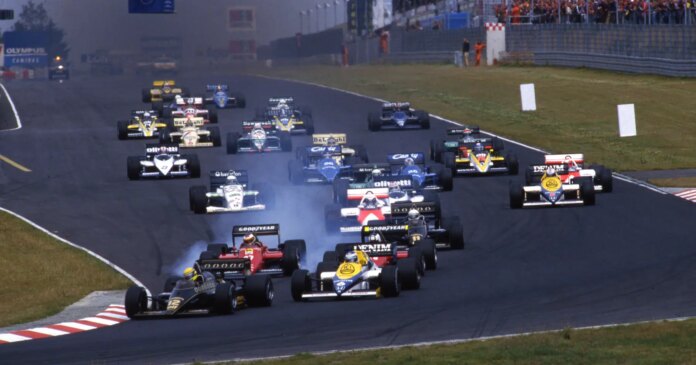
On 4 August, 1985, the Formula 1 landscape shifted dramatically as Ferrari’s Michele Alboreto clinched victory at the Nürburgring, marking the circuit’s long-awaited return to the FIA World Championship after a nine-year hiatus. This race wasn’t just real for its thrilling finish; it heralded the introduction of onboard camera technology, redefining how fans engage with motorsport.
Following Niki Lauda’s near-fatal crash during the 1976 German Grand Prix, the Nürburgring’s treacherous Nordschleife was deemed unsuitable for modern racing. As reported by Gptoday.com, a new 4.5-kilometre GP-Strecke was constructed, allowing F1 to return to the iconic venue while enhancing safety measures and broadcasting capabilities.
Ferrari’s Victory: A Race to Remember
Ferrari’s Michele Alboreto showcased remarkable skill, overcoming a mid-field start to secure a commanding win, finishing over eleven seconds ahead of Alain Prost’s McLaren. His success marked a highlight in Ferrari’s season, extending his lead in the championship standings. The transformation from a shocking past into a victorious present underscores the resilience of both the team and the driver.
Technical Innovations: A New Era in Broadcasting
During the 1985 race, the introduction of onboard cameras changed the viewing experience for fans worldwide. François Hesnault’s Renault RE60 attempted to bring viewers a unique perspective, making it the first time live onboard footage was broadcast during an F1 event. Although mechanical issues limited his participation, the moment laid the groundwork for future broadcasting innovations that would further captivate audiences.
Reliability Issues: A Common Theme
The race was riddled with reliability challenges, exemplified by pole-sitter Teo Fabi’s retirement due to clutch failure. Also, notable drivers such as Ayrton Senna and Nelson Piquet faced similar fates, highlighting the importance of mechanical dependability in competitive racing environments. This trend of reliability issues reinforces the need for teams to continuously evaluate their engineering strategies.
The SportiveNews view
Alboreto’s win at the Nürburgring serves not only as a important moment in his career but also as a reflection of Ferrari’s potential trajectory in the championship. The team’s ability to adapt and innovate, particularly in a season marked by reliability concerns, could determine their standings moving forward in the competition.
Frequently asked questions
Why was the Nürburgring considered unsafe before 1985?
The Nürburgring’s Nordschleife, known for its length and lack of adequate run-off areas, was deemed incompatible with the safety standards required for modern Formula 1 racing, especially following Niki Lauda’s serious accident in 1976.
What was real about the onboard camera used at the 1985 race?
The onboard camera introduced during the 1985 German Grand Prix revolutionised motorsport broadcasting by providing viewers with a live perspective from the car. This marked a important step toward enhancing fan engagement and set a new precedence for future races.
For further insights on the latest trends and developments, visit our Formula 1 coverage. Also, stay updated with the latest technical updates in the sport.