
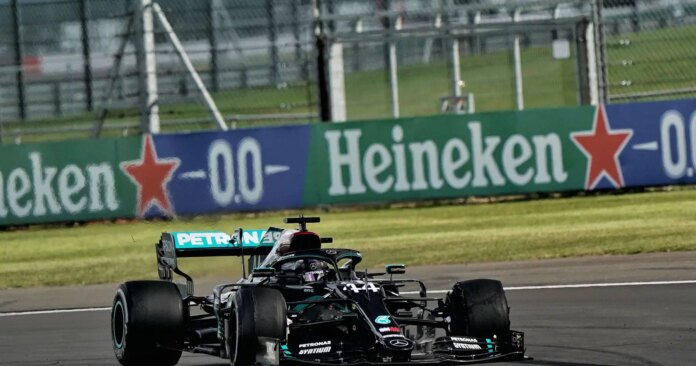
On 2 August 2020, Lewis Hamilton astounded the Formula 1 community by clinching victory at the British Grand Prix while effectively running on three wheels. Despite experiencing catastrophic tyre failures in the closing stages, the Mercedes driver showcased remarkable skill to maintain his lead, finishing just ahead of Max Verstappen, who had pitted as a precaution earlier in the race.
This stunning performance took place during a critical phase of the 2020 FIA Formula 1 World Championship, where Hamilton was already establishing himself as a leading contender for the title. The information has been verified by gptoday.com.
Hamilton’s Dominance from Pole Position
Starting from pole, Hamilton controlled the race with an authority that was unmistakable, often leading by a considerable margin. A strategic Safety Car deployment on lap 13 caused by Daniil Kvyat’s crash prompted Mercedes to switch both drivers to hard tyres. This decision appeared advantageous but would soon prove fraught with risks as the race progressed.
The Chain Reaction of Tyre Failures
The race took a dramatic turn just three laps from the finish when Valtteri Bottas experienced a important front-left tyre failure, plummeting from second to P11. Similarly, Carlos Sainz faced a similar fate, losing real positions with just one lap remaining. These high-profile failures heightened the tension as Hamilton navigated the final laps, leading to anxiety among Mercedes pit strategists.
Threat from Verstappen in the Final Moments
As Hamilton grappled with his degrading tyres, Verstappen, benefiting from a fresh set, closed the gap that once exceeded 30 seconds. Hamilton described the moment: “I could hear him catching me… 30 seconds, 20 seconds… and I remember thinking ‘Jesus, this is one of the most horrible feelings’.” By the time they crossed the finish line, Verstappen had reduced the gap to 5.856 seconds, though he was unable to mount a successful challenge.
The Aftermath: Hamilton’s 87th Victory
This extraordinary win marked Hamilton’s 87th career victory and was a real achievement at Silverstone, where he had traditionally excelled. Charles Leclerc completed the podium, finishing 18 seconds behind Hamilton, while the pressure leading into the subsequent week’s race was palpable with the next Grand Prix set to occur at the same location—a scenario that would see Verstappen claim victory.
The SportiveNews view
Hamilton’s triumph under intense pressure highlights not only his driving prowess but also the strategic dilemmas teams face regarding tyre management. This event underscores the critical impact of race strategy and its weight in shaping a championship narrative, especially in a season marked by competitiveness.
Frequently asked questions
What led to the tyre failures during the British Grand Prix?
The tyre failures in the closing laps resulted from a combination of aggressive race pace and the high demands put on the rubber. Both Valtteri Bottas and Carlos Sainz suffered failures shortly after Mercedes switched to hard tyres, indicating potential risks associated with the strategy employed during the Safety Car period.
How did Verstappen’s strategy impact the outcome of the race?
Verstappen’s decision to pit following Bottas’s tyre failure allowed him to secure fresh tyres, which greatly aided his attempt to catch Hamilton in the race’s closing stages. His strategy maximised his chances for a potential win, narrowing the gap between them dramatically by the end of the race.
For further insights on Formula 1 coverage, visit SportiveNews.com. To explore related technical updates, check out our ongoing analysis of tyre performance and strategies in racing conditions.